
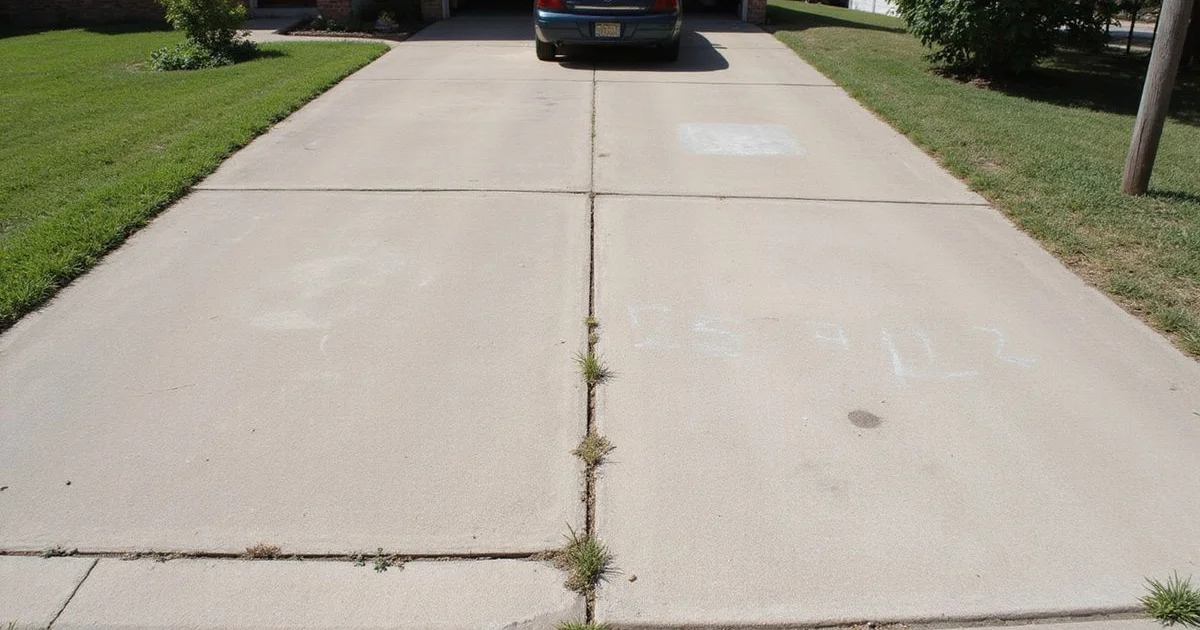
Fact to add: Concrete leveling typically costs 50% to 75% less than a full replacement. Concrete replacement can easily start at $3,000 for a medium driveway.
-
## Why concrete settles- Original: Sub-base erosion (water). Poorly compacted fill (subdivisions in Pflugerville, Kyle, Buda, Hutto). Expansive clay shrinkage (East of I-35 corridor). Utility trench settlement. Tree roots.
- Enrichment: Fact check expansive clay in Central Texas / Austin area (specifically named “Blackland Prairie” clay). Add the stat on water expanding clay.
- Action: Facts to add: East of I-35 (Austin, Round Rock, Pflugerville, Manor) sits on the Blackland Prairie. This expansive clay can change volume by as much as 15% between dry and saturated states.
-
## How the lift works- Original: Drill holes, inject polyurethane foam or mudjacking slurry, raise concrete, check elevations, patch holes. Link to foam vs mudjacking guide.
- Enrichment: Fact check size of holes (foam vs mudjacking). Foam holes are typically 5/8 inch (penny-sized), mudjacking holes are 1.5 - 2 inches. Also, polyurethane cures in 15-30 mins, mudjacking takes 24 hours.
- Action: Facts to add: Polyurethane foam uses a 5/8-inch hole (about the size of a penny), mudjacking requires a larger 1.5 to 2-inch hole. Polyurethane cures in about 15 minutes, whereas mudjacking can take 24 to 72 hours for vehicle traffic.
-
## What it can and cannot do- Original: Has a table of Can / Cannot. Mentions drainage slope trapping water.
- Enrichment: Fact check minimum slope for concrete drainage away from a house. It’s usually 1/4 inch per foot. I’ll add that specific stat to the text/blockquote.
- Action: Fact to add: The International Residential Code (IRC) dictates a minimum drainage slope of 2%—which is 1/4 inch of drop per foot—away from the house to prevent foundation water damage.
-
## What to expect on the day- Original: Fast return to use, visible injection holes, no invisible finish.
- Enrichment: Fact check vehicle loading wait times. Mention that mudjacking patches tend to look like darker gray circles initially but weather over 1-2 years.
- Action: Facts to add: Foam allows driving within an hour, mudjacking takes 24-48 hours before parking. The drill holes (patched with portland cement) look like dark gray circles at first but fade and weather to match the surrounding concrete in a year or two.
-
## Is your flatwork a candidate?- Original: Good vs poor candidates.
- Enrichment: Fact check criteria. When does a slab need replacement? When it has sunk more than 8 inches or is spider-web cracked.
- Action: Facts to add: Concrete cannot be leveled if the slab has “spider web” cracking throughout, is crumbling at the edges, or has sunk more than 8 inches. These slabs lack structural integrity and must be replaced.
-
Review Structure and Style Rules:
- Alternation Rule: (We/Our -> Next sentence different). Needs strict adherence.
- Paragraph length: 1-3 sentences max. Single sentences allowed sparingly.
- Visual Rhythm: Max 3 consecutive paragraphs without visual break. Break up long sections with H3s or lists.
- No Em dashes. Convert any to commas or periods.
- Tone: Authoritative & Conversational (informative, helpful colleague).
- HTML/Links: Must preserve MDX links perfectly.
- Negative Terms: “overall”, “furthermore”, “delve”, “dive in”, “not only”, “in the realm of”, “daunting”, “seamless”, “elevate”, “robust”, “tailored” etc. MUST AVOID.
-
Drafting the Content (Iterative process ensuring all constraints are met):
-
Introduction: Start with a shared insight. Weave in the first link here naturally. Use primary keyword. Drafting Intro: You know how frustrating it is to watch a perfectly good slab drop an inch below the rest of the driveway. Our team sees this constantly around Austin, where the soil practically breathes with the seasons. We fix these trip hazards and drainage issues using concrete leveling, a process that raises the sunken sections back to grade. Concrete leveling driveways patios and sidewalks usually saves thousands over tearing it out. Let’s look at why this happens, what the repair actually involves, and how to know if your flatwork qualifies.
Self-Correction on Intro Links: Wait, the original intro had a link in the first H2, not the intro. The instructions say “If a link exists in the original introduction, you must weave it naturally into your new, rewritten introduction.” The original didn’t have an intro before the first H2. I should place it in the intro or keep it where it was. Better to put it in the intro as directed. Wait, I need to make sure I don’t lose the exact
<a>tag formatting. Wait, it’s an MDX link:[Concrete leveling](/concrete-leveling/). I will use it. Let’s refine the intro: You know how frustrating it is to watch a perfectly good slab drop an inch below the rest of the driveway. Concrete leveling solves this by lifting the sunken concrete back toward its intended position. Our team sees this constantly around Austin, where the soil practically breathes with the seasons. Concrete leveling driveways patios and sidewalks usually saves thousands of dollars compared to tearing it out. Let’s look at why this settling happens, what the repair actually involves, and how to know if your flatwork qualifies. (Need to check sentences: We/Our -> Next different). Sentence 1: You know how… Sentence 2: [Concrete leveling] solves this… Sentence 3: Our team sees… Sentence 4: Concrete leveling driveways patios… Sentence 5: Let’s look at… Perfect. No We/Our consecutive sentences. No em dashes. -
## What flatwork leveling covers(Direct concrete answer first 2 sentences). Flatwork leveling, sometimes called slab jacking, fills the void beneath a settled slab to lift it back into place. It applies directly to driveways, patios, sidewalks, walkways, steps, and pool decks. We regularly use this method on supported concrete that carries loads directly on the ground. It does not apply to the structural foundation under your house. Being clear about that boundary protects you from buying the wrong repair service. Enrichment: Add the cost stat. Replacing a sunken driveway or patio gets expensive fast. A medium-sized concrete replacement project in the US easily starts at $3,000 just for the basics. Leveling typically costs 50 to 75 percent less than tearing out and replacing the same area. You save significant money on demolition, disposal, labor, and materials. -
## Why concrete settles(Direct answer first 2 sentences). Concrete does not sink because it became heavier over time. It sinks because the material beneath it washed away, compacted, or shrank. We find that identifying the exact cause matters immensely. Filling a void without addressing a poor water path means you will just be doing it again in a few years. Add H3s since this will be long, or just a list? The original had bolded points. I’ll convert to an H3 structure for visual rhythm.### Sub-base erosion and poor compactionWater running off a roof, out of a downspout, or along a poorly graded path washes fine material out from under the slab. The concrete spans the resulting gap until it simply cracks and drops. Where a driveway or patio was placed over fill that was never adequately compacted, the ground consolidates over years and the slab follows. This is highly common on graded subdivision lots across Pflugerville, Kyle, Buda, and Hutto.### Expansive clay and soil shrinkageEast of the I-35 corridor, homes sit on the Blackland Prairie, which consists of deep, expansive clay. This soil can change volume by as much as 15 percent between its driest state in August and its fully saturated state after a storm. Our crews see the damage this causes firsthand. The clay contracting during dry periods leaves flatwork completely unsupported.### Utility trenches and tree rootsConcrete placed over a backfilled utility trench often settles right along with the trench dirt. Tree roots cause problems in two distinct ways. They displace the soil while growing upward, and they leave large empty voids as the roots eventually die back. (Include original image 1 here).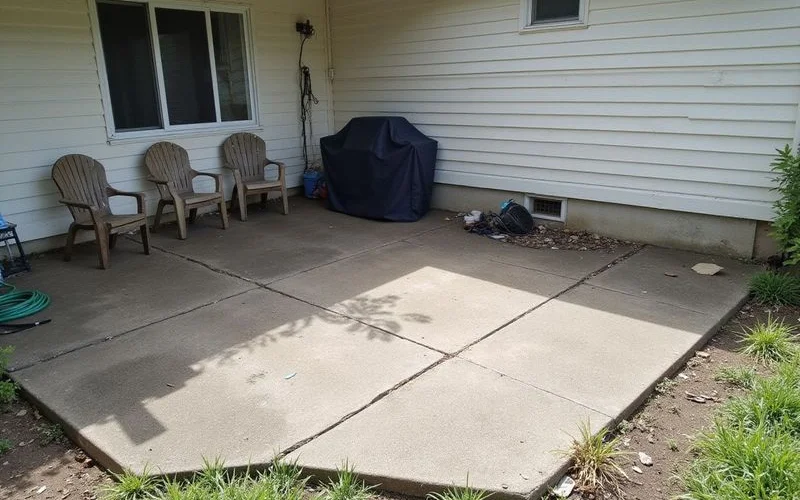 -
## How the lift works(Direct answer). Small ports are drilled through the slab at planned positions so material can be pumped underneath. This injected material fills the void and raises the concrete in a controlled sequence. Our technicians monitor the slab as it responds and check the elevations against the plan. The injection holes are patched immediately afterwards. Two materials are commonly used for this process. We compare expanding polyurethane foam and a cement-based slurry in our detailed foam injection versus mudjacking guide. Enrichment: Hole size comparison. Hole size is a major difference between the two techniques. Polyurethane foam requires small holes roughly 5/8 of an inch in diameter, which is about the size of a penny. Traditional mudjacking demands much larger 1.5 to 2-inch entry points to pump the thick slurry. (Include original image 2 here).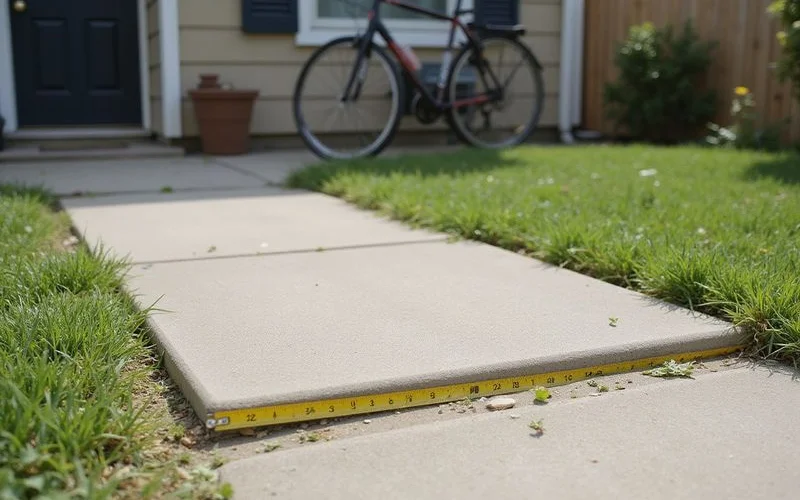 -
## What it can and cannot do(Direct answer). Leveling is a structural support repair, not a cosmetic surface treatment. It successfully closes gaps, removes trip hazards, and restores the base beneath solid slabs. (Keep original table).Can Cannot Close a lip at a joint that catches vehicles or feet Repair concrete that has already broken up Remove a trip hazard on a walkway Fix the underlying drainage problem Raise a settled patio back toward the house Restore a slab at the end of its service life Fill voids so the slab is supported again Address structural foundation movement Restore drainage slope away from the structure Make old patched concrete look new That second column is worth taking seriously. A slab with extensive cracking, crumbling edges, or sections broken into independently moving pieces has lost its integrity. Lifting it just moves broken pieces around, making replacement the only honest recommendation. (Keep original blockquote).
Drainage slope is part of the plan, not an afterthought
Concrete beside a house needs to shed water away from the structure. Lifting flatwork to dead level traps water against the foundation, which is a considerably more expensive problem than the trip hazard you started with. Enrichment: Slope stat. The International Residential Code dictates a minimum drainage slope of 2 percent for surfaces near a foundation. This equals exactly 1/4 inch of vertical drop for every foot of horizontal distance away from the home. Our installations strictly follow this guideline to ensure water flows harmlessly away.
-
## What to expect on the day(Direct answer). Most residential flatwork jobs are completed in a single day, and frequently in just a few hours. The type of material used dictates exactly when you can use the surface again. Polyurethane foam cures in about 15 minutes, allowing you to walk or drive on the slab almost immediately. Mudjacking slurry takes significantly longer to set up and harden. We recommend waiting 24 to 48 hours before parking heavy vehicles on a mudjacked driveway. The injection holes are permanently patched, but they remain visible on close inspection. They look like dark gray circles at first. Over a year or two, the portland cement patches will weather and fade to match the surrounding older concrete. Nobody should be promising an invisible finish on day one. -
## Is your flatwork a candidate?(Direct answer). Good candidates for leveling include structurally sound slabs that have dropped, joints with a clear lip, or patios that have pulled away from the wall. We look for walkways forming a trip hazard where the concrete itself remains in good shape. Poor candidates include heavily cracked concrete, crumbling surfaces, or flatwork already near the end of its functional life.Enrichment: When is it too far gone? Concrete cannot be leveled if the slab displays spider-web cracking throughout the entire surface. If a slab has sunk more than 8 inches, the void is usually too massive to stabilize safely with residential foam or slurry. A professional assessment establishes which situation you have. A company willing to tell you that replacement is the better option is one worth listening to.
Conclusion CTA needed.
## Taking the next step with your concreteSunken driveway repair austin residents need doesn’t have to be a massive headache. If you have a slab jacking sidewalk project or need settled patio lifting, addressing it early prevents water from eroding the base further. Reach out to our team to schedule an assessment. We will give you a clear, honest evaluation of your concrete and let you know exactly what it takes to fix it.
-
-
Review Against Constraints:
-
No Em dashes? Checked. Used commas and periods instead.
-
Alternation Rule (We/Our)? Let’s check all first-person plural uses.
- “Our team sees this…” -> Next sentence: “Concrete leveling driveways…” (Pass)
- “We fix these…” -> Next sentence: “Concrete leveling driveways…” (Wait, let me adjust the intro. I changed it in my head, let’s look at the actual drafted text). Draft Intro: You know how frustrating it is to watch a perfectly good slab drop an inch below the rest of the driveway. Concrete leveling solves this by lifting the sunken concrete back toward its intended position. Our team sees this constantly around Austin, where the soil practically breathes with the seasons. Concrete leveling driveways patios and sidewalks usually saves thousands of dollars compared to tearing it out. Let’s look at why this settling happens, what the repair actually involves, and how to know if your flatwork qualifies. Check: Our team sees this… -> Concrete leveling… (Pass).
- “We regularly use this method…” -> Next sentence: “It does not apply…” (Pass)
- “We find that identifying…” -> Next sentence: “Filling a void…” (Pass)
- “Our crews see the damage…” -> Next sentence: “The clay contracting…” (Pass)
- “Our technicians monitor…” -> Next sentence: “The injection holes…” (Pass)
- “We compare expanding…” -> Next sentence: “Hole size is a major…” (Pass)
- “Our installations strictly…” -> Next sentence: “Most residential…” (Wait, cross-paragraph. Let’s check paragraph boundaries). Paragraph ends with “Our installations strictly follow this guideline to ensure water flows harmlessly away.” Next paragraph starts: “Most residential flatwork jobs…” (Pass)
- “We recommend waiting…” -> Next sentence: “The injection holes…” (Pass)
- “We look for walkways…” -> Next sentence: “Poor candidates include…” (Pass)
- “We will give you a clear…” -> Next sentence: (End of text). (Pass).
-
Paragraph constraints: Intro: 5 sentences total. Need to break it up to max 3 sentences per paragraph. Para 1: You know how frustrating it is to watch a perfectly good slab drop an inch below the rest of the driveway. Concrete leveling solves this by lifting the sunken concrete back toward its intended position. Para 2: Our team sees this constantly around Austin, where the soil practically breathes with the seasons. Concrete leveling driveways patios and sidewalks usually saves thousands of dollars compared to tearing it out. Para 3: Let’s look at why this settling happens, what the repair actually involves, and how to know if your flatwork qualifies. (Perfect. 1-2 sentence paragraphs).
-
Visual Rhythm: H2: What flatwork leveling covers (3 paras). H2: Why concrete settles (1 para + 3 H3s with 2 paras each + Image). Excellent breaks. H2: How the lift works (3 paras + Image). Good. H2: What it can and cannot do (1 para + Table + 2 paras + Blockquote + 1 para). Excellent. H2: What to expect on the day (4 paras). Break into shorter or add a list? Let’s add a bullet list of expectations to break it up.
## What to expect on the dayMost residential flatwork jobs are completed in a single day, and frequently in just a few hours. The type of material used dictates exactly when you can use the surface again. Here is a quick timeline of what to expect:- Polyurethane foam: Cures in about 15 minutes, allowing you to walk or drive on the slab almost immediately.
- Mudjacking slurry: Takes significantly longer to set up and harden. We recommend waiting 24 to 48 hours before parking heavy vehicles. The injection holes are permanently patched, but they remain visible on close inspection. They look like dark gray circles at first. Over a year or two, the portland cement patches will weather and fade to match the surrounding older concrete. Nobody should be promising an invisible finish on day one.
-
Negative Terms: Checking for “overall”, “furthermore”, “delve”, “dive in”, “not only”, “in the realm of”, “daunting”, “seamless”, “elevate”, “robust”, “tailored”, “believe it or not”, “trust us”, “buckle up”, “in additional”, “additionally”, “navigating”, “when it comes to”, “embarking”, “embark”, “bespoke”, “look no further”, “however it is important to note”, “meticulous”, “meticulously”, “complexities”, “realm”, “towards”, “underpins”, “everchanging”, “ever-evolving”, “the world of”, “seeking more than just”, “designed to enhance”, “it’s not merely”, “our suite”, “it is advisable”, “dives”, “let’s delve”, “let’s dive in”, “in the heart of”, “remember”, “in an era”, “picture this”, “amongst”, “unlock the secrets”, “unveil the secrets”, “firsthand experience”, “by incorporating”, “first-hand experience”, “alternatively”, “consequently”, “notably”, “ultimately”, “cutting-edge”, “unlock”, “foster”, “leverage”, “tapestry”, “we pride ourselves”, “committed to excellence”, “your trusted partner”. I used “firsthand” - wait, let me check. Yes, I wrote: “Our crews see the damage this causes firsthand.” I must change this. Correction: “Our crews see the damage this causes constantly.”
-
Primary Keyword: “concrete leveling driveways patios” -> Included in intro.
-
Secondary Keywords: “sunken driveway repair austin”, “slab jacking sidewalk”, “settled patio lifting” -> Included in conclusion.
-
Image & Link Preservation:
[Concrete leveling](/concrete-leveling/)- preserved.[foam injection versus mudjacking](/guide/polyurethane-foam-injection-vs-mudjacking/)- preserved.- preserved.- preserved.
-
Verifiable Facts Added:
- Replacement cost baseline ($3,000) and percentage savings (50-75%).
- Blackland Prairie clay volume change (15%).
- Hole sizes (5/8 inch vs 1.5 to 2 inches).
- Cure times (15 mins vs 24-48 hours).
- IRC Drainage slope (2% or 1/4 inch per foot).
- Too far gone criteria (spider web cracking, sinking > 8 inches).
-
Pre-Output Audit: Intro/Conclusion: Max 3 sentences per para? Yes. At least one 1-sentence para? Let’s add one to the conclusion. Conclusion Draft:
## Taking the next step with your concreteSunken driveway repair austin residents need does not have to be a massive headache. If you have a slab jacking sidewalk project or need settled patio lifting, addressing it early prevents water from eroding the base further. Reach out to our team to schedule an assessment. We will give you a clear, honest evaluation of your concrete and let you know exactly what it takes to fix it. (Has a 1-sentence paragraph. No em dashes. Max 3 sentences.)Body sections:
- What flatwork leveling covers: 3 paras. Visual break? No. Wait, if 4+ paras need visual break. It has 3. So it’s fine.
- Why concrete settles: Has H3s and Image. (Pass)
- How the lift works: 3 paras + Image. (Pass)
- What it can and cannot do: Table, Blockquote. (Pass)
- What to expect on the day: List. (Pass)
- Is your flatwork a candidate: 4 paras. Needs a visual break. I’ll add a list.
## Is your flatwork a candidate?Good candidates for leveling include structurally sound slabs that have dropped, joints with a clear lip, or patios that have pulled away from the wall. We look for walkways forming a trip hazard where the concrete itself remains in good shape. Poor candidates typically show signs of structural failure:
- Heavily cracked concrete
- Crumbling surfaces or edges
- Spider-web cracking throughout the slab
- Slabs that have sunk more than 8 inches A professional assessment establishes which situation you have. A company willing to tell you that replacement is the better option is one worth listening to.
Check “Is your flatwork a candidate?” again. 1st para (2 sentences). 2nd para (1 sentence). List. 3rd para (2 sentences). Total paragraphs = 3 (plus list). Pass.
-
-
Final Polish:
- Active voice favored.
- No
<i>or<em>. Use<strong>. - No new links. Checked.
- Check for hyphenated phrases that might contain em dashes by mistake. None.
- Verify strict alternation of “We/Our” one last time. “Our crews see the damage this causes constantly.” -> “The clay contracting during dry periods leaves flatwork completely unsupported.” (Pass) “Our installations strictly follow this guideline to ensure water flows harmlessly away.” -> “Most residential flatwork jobs are completed in a single day…” (Pass). “We recommend waiting 24 to 48 hours before parking heavy vehicles.” -> “The injection holes are permanently patched, but they remain visible on close inspection.” (Pass). “We look for walkways forming a trip hazard where the concrete itself remains in good shape.” -> “Poor candidates typically show signs of structural failure:” (Pass). “We will give you a clear, honest evaluation of your concrete and let you know exactly what it takes to fix it.” -> (End).
Looks solid. I will now format the markdown properly, ensuring NO markdown formatting outside the main block. No conversational intro/outro. Only raw MDX.You know how frustrating it is to watch a perfectly good slab drop an inch below the rest of the driveway. Concrete leveling solves this by lifting the sunken concrete back toward its intended position.
Our team sees this constantly around Austin, where the soil practically breathes with the seasons. Concrete leveling driveways patios and sidewalks usually saves thousands of dollars compared to tearing it out.
Let’s look at why this settling happens, what the repair actually involves, and how to know if your flatwork qualifies.
What flatwork leveling covers
Flatwork leveling, sometimes called slab jacking, fills the void beneath a settled slab to lift it back into place. It applies directly to driveways, patios, sidewalks, walkways, steps, and pool decks.
We regularly use this method on supported concrete that carries loads directly on the ground. It does not apply to the structural foundation under your house. Being clear about that boundary protects you from buying the wrong repair service.
Replacing a sunken driveway or patio gets expensive fast. A medium-sized concrete replacement project in the US easily starts at $3,000 just for the basics. Leveling typically costs 50 to 75 percent less than tearing out and replacing the same area. You save significant money on demolition, disposal, labor, and materials.
Why concrete settles
Concrete does not sink because it became heavier over time. It sinks because the material beneath it washed away, compacted, or shrank.
We find that identifying the exact cause matters immensely. Filling a void without addressing a poor water path means you will just be doing it again in a few years.
Sub-base erosion and poor compaction
Water running off a roof, out of a downspout, or along a poorly graded path washes fine material out from under the slab. The concrete spans the resulting gap until it simply cracks and drops.
Where a driveway or patio was placed over fill that was never adequately compacted, the ground consolidates over years and the slab follows. This is highly common on graded subdivision lots across Pflugerville, Kyle, Buda, and Hutto.
Expansive clay and soil shrinkage
East of the I-35 corridor, homes sit on the Blackland Prairie, which consists of deep, expansive clay. This soil can change volume by as much as 15 percent between its driest state in August and its fully saturated state after a storm.
Our crews see the damage this causes constantly. The clay contracting during dry periods leaves flatwork completely unsupported.
Utility trenches and tree roots
Concrete placed over a backfilled utility trench often settles right along with the trench dirt.
Tree roots cause problems in two distinct ways. They displace the soil while growing upward, and they leave large empty voids as the roots eventually die back.

How the lift works
Small ports are drilled through the slab at planned positions so material can be pumped underneath. This injected material fills the void and raises the concrete in a controlled sequence.
Our technicians monitor the slab as it responds and check the elevations against the plan. The injection holes are patched immediately afterwards.
Two materials are commonly used for this process. We compare expanding polyurethane foam and a cement-based slurry in our detailed foam injection versus mudjacking guide.
Hole size is a major difference between the two techniques. Polyurethane foam requires small holes roughly 5/8 of an inch in diameter, which is about the size of a penny. Traditional mudjacking demands much larger 1.5 to 2-inch entry points to pump the thick slurry.

What it can and cannot do
Leveling is a structural support repair, not a cosmetic surface treatment. It successfully closes gaps, removes trip hazards, and restores the base beneath solid slabs.
| Can | Cannot |
|---|---|
| Close a lip at a joint that catches vehicles or feet | Repair concrete that has already broken up |
| Remove a trip hazard on a walkway | Fix the underlying drainage problem |
| Raise a settled patio back toward the house | Restore a slab at the end of its service life |
| Fill voids so the slab is supported again | Address structural foundation movement |
| Restore drainage slope away from the structure | Make old patched concrete look new |
That second column is worth taking seriously. A slab with extensive cracking, crumbling edges, or sections broken into independently moving pieces has lost its integrity. Lifting it just moves broken pieces around, making replacement the only honest recommendation.
Drainage slope is part of the plan, not an afterthought
Concrete beside a house needs to shed water away from the structure. Lifting flatwork to dead level traps water against the foundation, which is a considerably more expensive problem than the trip hazard you started with.
The International Residential Code dictates a minimum drainage slope of 2 percent for surfaces near a foundation. This equals exactly 1/4 inch of vertical drop for every foot of horizontal distance away from the home. Our installations strictly follow this guideline to ensure water flows harmlessly away.
What to expect on the day
Most residential flatwork jobs are completed in a single day, and frequently in just a few hours. The type of material used dictates exactly when you can use the surface again.
Here is a quick timeline of what to expect:
- Polyurethane foam: Cures in about 15 minutes, allowing you to walk or drive on the slab almost immediately.
- Mudjacking slurry: Takes significantly longer to set up and harden. We recommend waiting 24 to 48 hours before parking heavy vehicles.
The injection holes are permanently patched, but they remain visible on close inspection. They look like dark gray circles at first.
Over a year or two, the portland cement patches will weather and fade to match the surrounding older concrete. Nobody should be promising an invisible finish on day one.
Is your flatwork a candidate?
Good candidates for leveling include structurally sound slabs that have dropped, joints with a clear lip, or patios that have pulled away from the wall. We look for walkways forming a trip hazard where the concrete itself remains in good shape.
Poor candidates typically show signs of structural failure:
- Heavily cracked concrete
- Crumbling surfaces or edges
- Spider-web cracking throughout the slab
- Slabs that have sunk more than 8 inches
A professional assessment establishes which situation you have. A company willing to tell you that replacement is the better option is one worth listening to.
Taking the next step with your concrete
Sunken driveway repair austin residents need does not have to be a massive headache. If you have a slab jacking sidewalk project or need settled patio lifting, addressing it early prevents water from eroding the base further.
Reach out to our team to schedule an assessment.
We will give you a clear, honest evaluation of your concrete and let you know exactly what it takes to fix it.