
Our team frequently sees property owners struggling with generic, unhelpful advice about Austin soils foundation problems. The reality is that Central Texas sits directly across a major geological transition line. This placement means the soil under a building depends heavily on regional location, construction practices, and localized water flow.
You will quickly see why understanding these specific variables is highly practical. It explains why a generic approach fails and why an on-site foundation evaluation provides far more insight than any regional map.
For a detailed breakdown of how these conditions dictate repair strategies, check out our complete guide to foundation repair in Austin.
We will break down the distinct soil zones below, explain the shrink-swell cycle, and outline exactly how to protect your property.
Why Central Texas ground is so variable
Central Texas ground is highly variable because the region is split by the Balcones Fault Zone, forcing two completely different geological systems against each other. You cannot treat property in this region with a one-size-fits-all approach. Recent 2026 data indicates that approximately 25% of homes in the Austin area experience foundation issues due to these distinct soil differences.
Our specialists evaluate thousands of these local slabs. The true cause of a failure usually involves the specific neighborhood geology mixed with highly localized moisture changes.
Treating Interstate 35 as an exact boundary is a convenient shorthand. This oversimplification falls apart quickly when reviewing mapped geology.
Expansive clay and the shrink-swell cycle
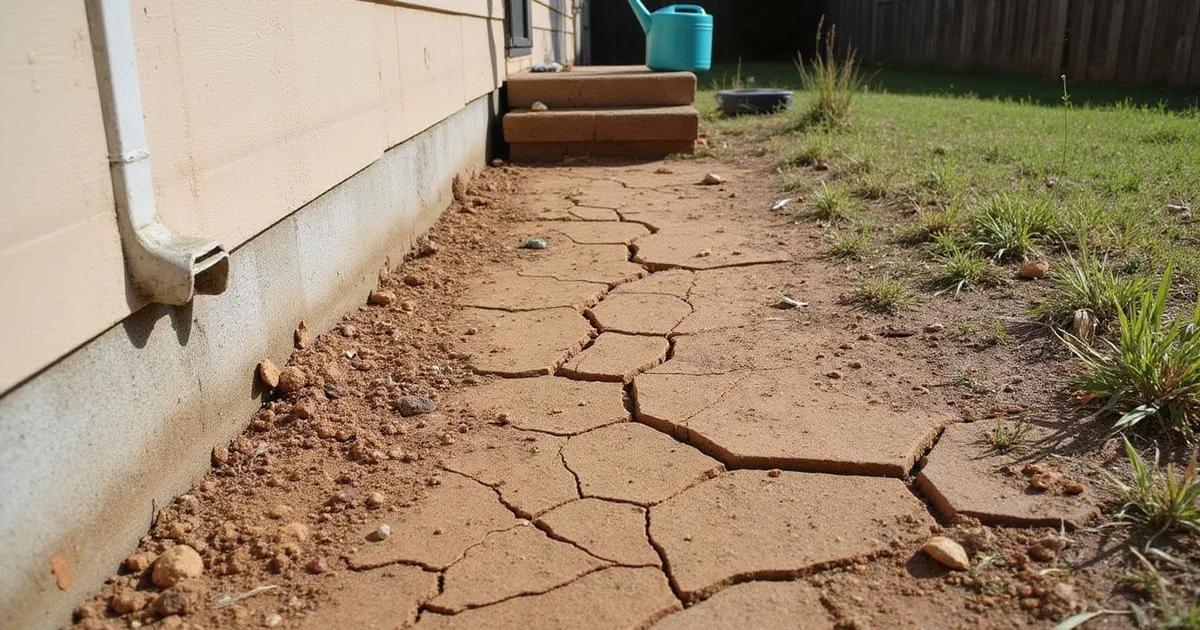
Expansive clay creates structural issues because it acts like a giant sponge, swelling massively when wet and contracting heavily when dry. East of the I-35 corridor, the Blackland Prairie clay Austin developers build on dominates the landscape. These specific soils, particularly the Houston Black series, have a Plasticity Index that commonly exceeds 50.
This high index means the soil can shrink and swell up to 2.3 inches (6 centimeters) seasonally. The volume change is substantial, and it repeats every single year with the changing weather. The actual danger is not just the movement itself, but exactly where that movement happens.
Our engineers know that the perimeter of a foundation sits over soil that dries the fastest and wets the fastest. Soil trapped under the center of a slab changes moisture levels much more slowly. This exact difference produces uneven support, and uneven support physically stresses a structure.
A long, dry Texas summer pulls perimeter soil away from a slab edge. Sustained autumn rain swells that soil right back. Cracks open and close with this exact cycle.
- Track the cracks: A crack seen once in August tells you very little on its own.
- Document changes: Take photos with a tape measure next to the crack for scale.
- Note the dates: Record when cracks open and when they close back up.
- Monitor doors: Watch for interior doors that stick only during specific seasons.
Limestone, caliche and the Balcones Fault Zone
West of the corridor, the Edwards Plateau takes over with limestone and caliche dominating the ground under Balcones Fault Zone foundations. This rocky terrain features very thin soil cover and bedrock close to the surface. You will find far less expansive clay in this area, which sounds like great news initially.
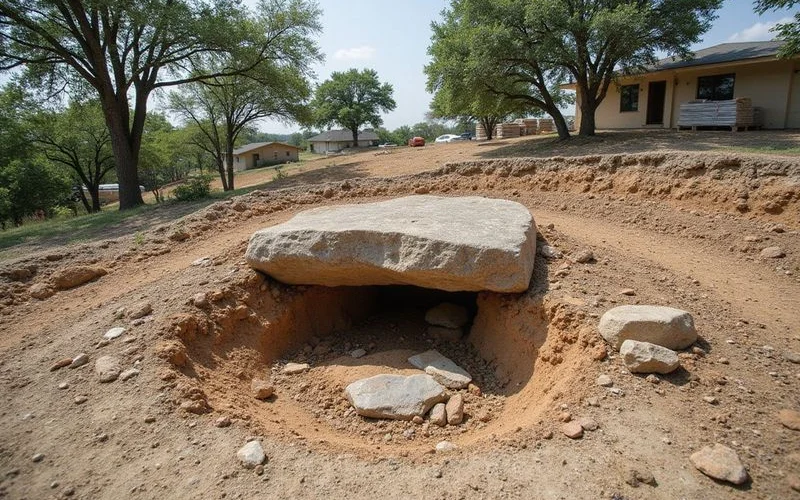
The real complication in this zone is the extreme depth variability. Rock depth can change sharply across a single residential lot. The Balcones Fault Zone is not just one simple line on a map. It contains multiple distinct fractures across a wide band, such as the Mount Bonnell Fault.
Our crews frequently see building pads where one side sits on solid, competent rock and the other side rests on placed fill dirt. Those two separate portions do not respond identically to heavy weight or heavy rain.
Add a steep slope, large retaining walls, and water moving rapidly along seams in fractured rock. You quickly see why Hill Country properties in West Lake Hills, Lakeway, Bee Cave, and Dripping Springs face a highly distinct set of structural questions.
- Variable Rock Depths: Bedrock can drop several feet across a single room’s footprint.
- Water Migration: Fractured limestone allows water to travel unexpectedly under slabs.
- Retaining Wall Stress: Sloped lots place immense lateral pressure on foundational walls.
Why adjacent properties behave differently
Adjacent properties behave differently because localized factors like lot grading, buried fill dirt, and tree roots change the soil moisture on a foot-by-foot basis. Even on identically mapped soil, neighboring houses regularly show completely different structural symptoms. The reasons are nearly always specific to the individual site.
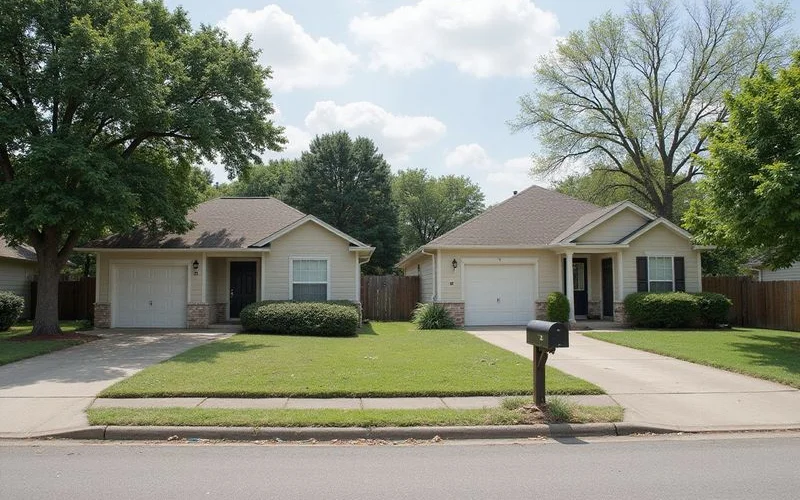
Our assessments consistently reveal four primary factors that alter localized ground behavior.
- Fill and grading: Subdivision developers cut and fill lots to create flat, buildable pads. The amount of fill sitting under a particular house, and how well contractors compacted it, varies wildly.
- Drainage: Critical factors include where downspouts discharge, whether swales between houses remain clear, and if the yard grade falls away from the slab. Irrigation systems running directly against the perimeter also cause massive problems.
- Vegetation: A mature Texas Live Oak can consume 50 to 100 gallons of water per day during the summer. A massive tree on one side of a house creates a deep moisture deficit that a tree-free lot next door simply does not experience.
- Site modifications: Heavy concrete patios, new room additions, large pools, re-grading, and utility trenches all alter how water moves. These additions change how the surrounding soil carries a load.
Soil maps are background, not investigation
Mapped soil data describes general areas as they were surveyed. It does not describe the fill placed under your slab, the trench your utilities run through, or where your gutters discharge. The mapping agency says as much: some engineering applications require on-site investigation.
Soil series, formations and fault zones are different things
These terms describe entirely different physical features, ranging from the top layer of dirt you plant a garden in down to the deep bedrock supporting a commercial building. Local contractors often mash these terms into one generic list of “soil types”, which is highly inaccurate. You need to understand the distinct layers to properly diagnose a property.
| Category | Examples | What it describes |
|---|---|---|
| Soil series | Houston Black, Heiden, Branyon, Burleson, Ferris, Austin, Tarrant, Brackett | Mapped surface soils and their behaviour |
| Geological formations | Austin Chalk, Taylor units, Eagle Ford, Del Rio, Edwards, Glen Rose | Bedrock units beneath the soil |
| Structural features | Balcones Fault Zone | Faulting that juxtaposes different units |
Our geotechnical partners look at these three categories to answer very different questions. A soil series tells a professional about shrink-swell behavior near the surface. A geological formation tells you what a steel pier might eventually bear on for permanent support.
The fault zone simply explains why these two layers change so rapidly across the central Texas region. You can use the USDA Web Soil Survey for baseline information, but you must verify those findings with physical core samples.
What this means for your property and Austin soils foundation problems
Regional geology tells you exactly which questions you need to ask. It absolutely does not answer those questions for your specific street address. The average foundation repair in Austin costs between $2,000 and $7,000 in 2026. This data makes early, accurate diagnosis highly cost-effective.
Our recommended sequence is to first understand the regional context, and then accurately measure your specific home. You need precise relative elevation readings, a thorough drainage and grading review, and an honest look at what owners have done to the site over the years.
That is exactly why no credible professional will diagnose your house based merely on which side of Interstate 35 it sits. The ground here is entirely too variable for that approach to be anything but a wild guess.
Start by inspecting your exterior drainage today to prevent Austin soils foundation problems, and call a specialist if you spot expanding cracks. Keeping moisture steady around the perimeter is the practical follow-through, and our guide to year-round foundation maintenance sets out that routine season by season.