
Concrete Leveling for Driveways, Patios & Sidewalks
Leveling for settled driveways, patios and sidewalks: foam injection versus mudjacking, what it addresses, and what it does not.
- Supported surfaces: driveways, patios, sidewalks and steps
- Foam injection vs. mudjacking explained
- What flatwork leveling addresses vs. structural work
- 4.9 (300+ Google reviews)
- Licensed & insured in Texas
- Fast Local Response
- Written Scope & Warranty
Why Homeowners Look Into Concrete Leveling
A sunken slab has become a trip hazard
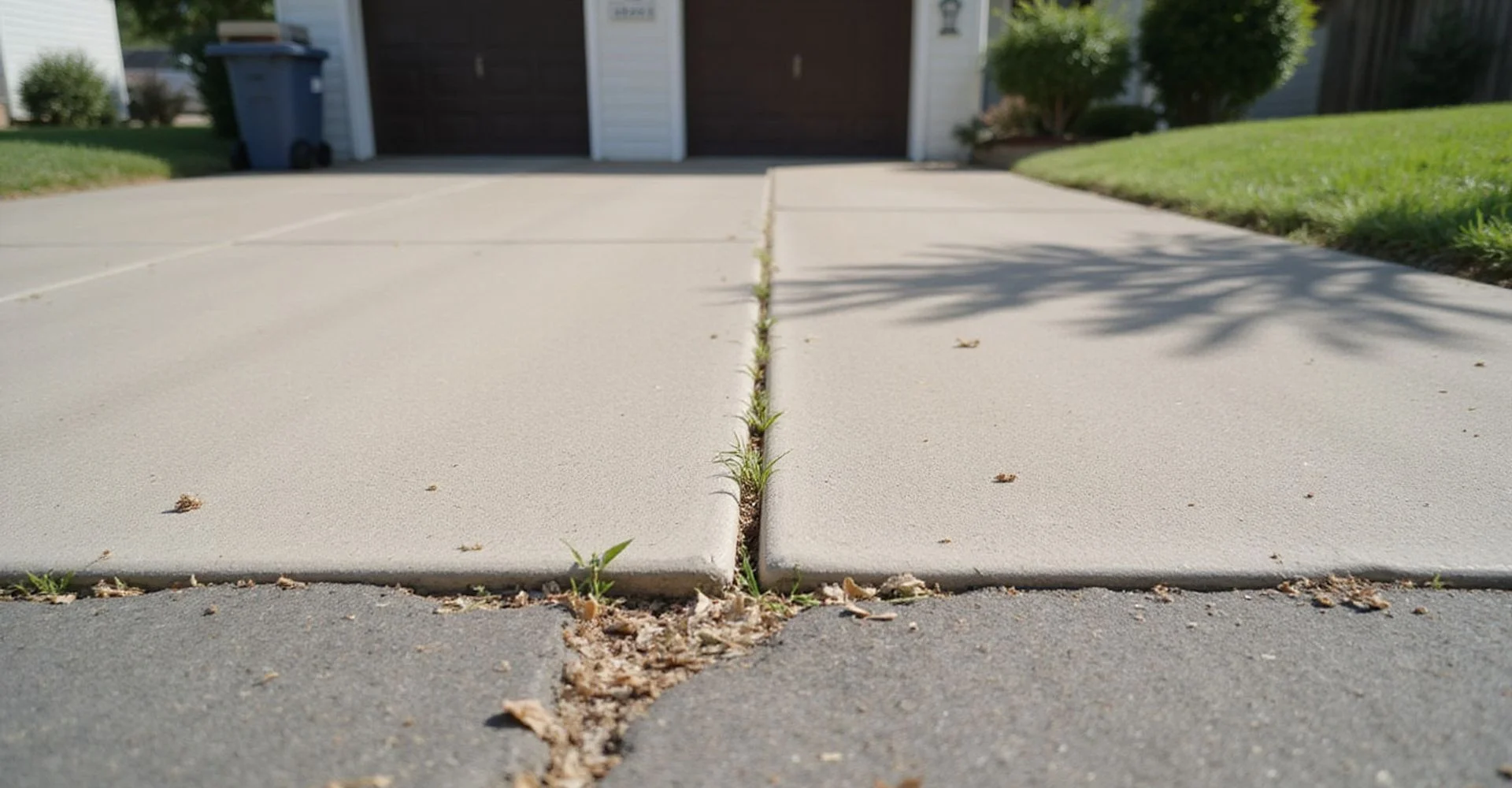
A lip at a driveway or walkway joint is both a liability and a sign the ground beneath has settled unevenly.
You do not know foam injection from mudjacking
Both lift concrete, but they work differently and suit different situations. The right choice depends on the slab, not a default answer.
A slab already re-settled after a previous job
Re-settlement usually means the underlying support was not addressed, not that leveling itself failed.
You are worried lifting will wreck the drainage slope
Concrete leveling should preserve or restore the slope away from the home. It is a stated part of the scope, not an afterthought.
What concrete leveling covers
Concrete leveling, sometimes called slab jacking, lifts settled flatwork back toward its intended position by filling the void beneath it. It applies to driveways, patios, sidewalks, walkways, steps and pool decks: supported concrete that carries loads on the ground rather than the structural foundation of a building.
Being precise about that boundary matters. This is not slab foundation repair. The foundation under your house carries the structure, and correcting it involves supports transferring load to deeper material. A sunken patio is a surface problem with a void underneath it. Different question, different method, different price. We handle both as part of our foundation repair services in Austin, and we will tell you which one your flatwork needs.
Some companies blur the two, either by implying a driveway lift protects your house or by quoting structural work when flatwork was the issue. We keep them separate.
Why flatwork settles
Concrete does not sink because it got heavier. It sinks because something beneath it went away.
Sub-base erosion is the most common cause in Central Texas. Water running off a roof, out of a downspout, or along a poorly graded path washes fine material out from beneath the slab, leaving a void. The concrete spans the gap until it cannot, then drops.
Poorly compacted fill is next. Where a driveway or patio was placed over fill that was never properly compacted during construction, the fill consolidates over years and the slab follows it down. This is common on graded subdivision lots across Pflugerville, Kyle, Buda and Hutto.
Expansive clay shrinkage contributes east of the I-35 corridor, where soil shrinks during dry periods and leaves flatwork temporarily unsupported. Utility trench settlement affects concrete placed over a backfilled trench. Tree roots can both displace and, as they die back, leave voids.
The cause matters because filling a void without addressing the water path means doing it again.
Foam injection versus mudjacking
Both methods lift concrete by filling the space underneath. They go about it differently.
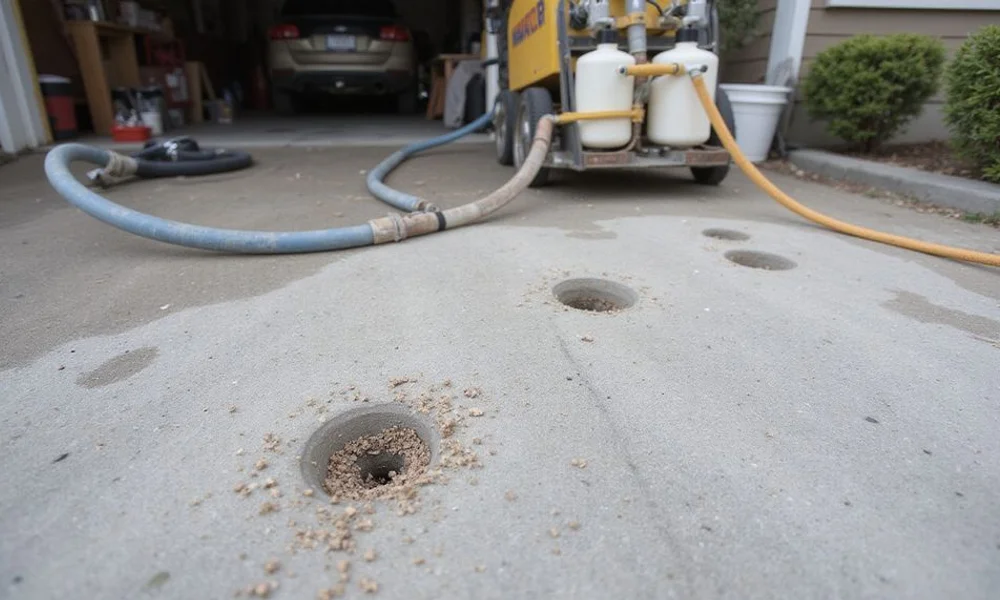
Polyurethane foam injection pumps a two-part expanding polymer through small ports, typically around the diameter of a pencil. The foam expands in place, fills the void and raises the slab. It is lightweight, so it adds little load to already questionable sub-base. It cures fast, often allowing return to use within hours. It resists water washout well. Material cost is generally higher.
Mudjacking pumps a cement-based slurry through larger holes, commonly an inch or more across. The material is heavy, closer in density to the original sub-base, and needs longer to cure before vehicle loading. Holes are more visible after patching. Material cost is generally lower.
Neither is universally better. Foam suits situations where weight matters, access is tight, holes should be minimal, or fast return to use is important. Mudjacking can suit large voids where material volume drives the cost, or where the heavier fill is preferred. It is a site decision, and a company that only ever offers one should at least explain why.
Our guide on polyurethane foam injection versus mudjacking compares them in more detail.
What leveling can and cannot do
It can close a lip at a joint that catches vehicles or feet, remove a trip hazard on a walkway, restore a patio that has pulled away and dropped, fill voids so the slab is supported again, and restore drainage slope away from the house.
It cannot repair concrete that has already broken up. A slab with extensive cracking, spalling or crumbling edges has lost its integrity, and lifting it just moves broken pieces. Replacement is the honest recommendation there, and we make it rather than performing a lift that will not hold.
It also cannot fix the cause on its own. If a downspout is discharging at the edge of the driveway, the void will reform. Drainage correction usually belongs alongside the lift.
Drainage comes first in the plan
This is where flatwork leveling gets done badly. The instinct is to lift everything to flat, and flat is exactly wrong for most of it.
A driveway, patio or walkway beside a house needs to shed water away from the structure. Lifting to a dead level plane traps water against the foundation, which on expansive clay creates a considerably more expensive problem than the trip hazard you started with.
So planning a lift means deciding target elevations that preserve the correct fall, not aiming at a uniform level. That is a design decision made before anything is injected.
What to expect on the day
Injection points are laid out and drilled. Material is injected in a controlled sequence, monitoring the slab as it responds. Elevations are checked against the plan. Holes are patched, and expansion joints are sealed where that is in scope.
Most residential flatwork jobs are completed in a day, frequently in a few hours. Foam typically allows return to use quickly; mudjacking usually needs longer before driving on it. The proposal should state the expected return-to-use time.
Patches are visible on close inspection, particularly on older weathered concrete where the new material will not match. We do not claim an invisible result.
When to consider replacement instead
Where the concrete is heavily cracked through rather than cleanly settled, where edges are crumbling, where the slab has broken into several independently moving pieces, or where the surface is at the end of its life anyway. Lifting buys little in those cases.
We would rather tell you that at the assessment than take the work. If you want a view on whether your flatwork is a candidate for lifting or replacement, request a quote and describe what you have, or read what affects concrete leveling cost first.
What Drives the Cost of Concrete Leveling?
We do not publish a headline price for this work, because a number without a scope is not useful to you. These are the factors that actually move a proposal up or down.
| Factor | Why it changes the number |
|---|---|
| Surface area | How much concrete needs lifting is the starting point. A single sunken sidewalk panel and a full driveway are very different jobs. |
| Void volume | The empty space beneath the slab determines how much material is needed to fill and lift. Large washouts consume considerably more than shallow settlement. |
| Method | Polyurethane foam and mudjacking have different material costs, equipment, cure times and disruption. Neither is universally cheaper once the whole job is considered. |
| Access | Equipment needs to reach the slab. Gated side yards, tight courtyards, steep drives and landscaping in the way all add time. |
| Slab condition | Sound concrete lifts well. Heavily cracked or crumbling slabs may not, and replacement can be the more sensible option. We will say so rather than lift something that will fail. |
| Joint sealing and patching | Injection holes are patched and expansion joints may need resealing afterwards. Whether that is included should be stated in the proposal. |
For a broader breakdown, read how much foundation repair costs in Austin and how to compare quotes .
Ready to get concrete leveling findings in writing?
Request a quote and we will explain what an evaluation can and cannot determine before you commit to anything.
Why Choose Us for Concrete Leveling
We keep it separate from structural work
Flatwork leveling is not foundation repair, and we never let one imply the other. Different problem, different scope, different conversation.
Drainage preserved
A driveway or patio needs to shed water away from the house. Lifting to flat instead of to correct slope creates a new problem.
Honest about replacement
Badly deteriorated concrete should be replaced, not lifted. We will tell you when lifting is throwing money at a slab that has already failed.
Method explained, not assumed
Foam and mudjacking both have their place. Which suits your slab depends on load, access, cure time and void conditions.
Cause considered
Voids come from somewhere. Sub-base erosion, poorly compacted fill and water paths get identified, not just filled.
Clean finish
Injection holes patched, joints addressed where scoped, site left tidy. The lift should not be obvious from the kerb.
How Our Concrete Leveling Process Works
- 1
Assess the flatwork
We look at how much the slab has settled, whether the concrete itself is sound, what caused the void, and whether lifting is the right answer.
- 2
Plan the lift
Injection points are laid out to lift evenly and to preserve the drainage slope away from the house rather than trapping water.
- 3
Inject and lift
Material is injected through small ports to fill voids and raise the slab in a controlled way, monitored as it moves.
- 4
Patch and finish
Injection holes are patched, expansion joints are addressed where scoped, and elevations are checked against the plan.
What Concrete Leveling Looks Like
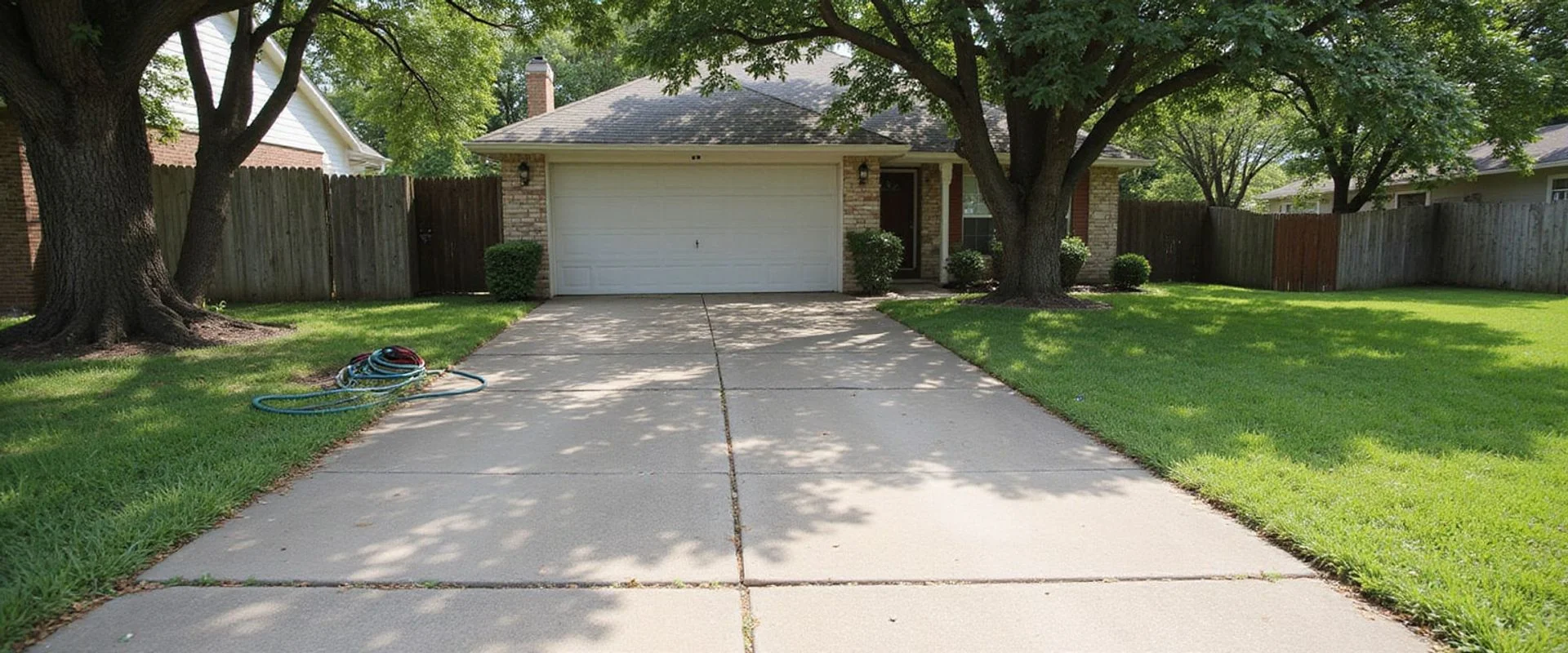
Access, conditions and restoration vary by property. These images show the kind of work and conditions involved.
Illustrative images, not documented records of specific customer projects.
What Customers Say About Our Concrete Leveling
Feedback from homeowners who wanted an explanation first and a quote second.
“Our driveway had a lip at the joint that caught every car. They lifted it in a morning and explained why the sub-base had washed out in the first place.”
“The sidewalk section was a genuine trip hazard. Straightforward job, clearly quoted, and they kept the slope running away from the house.”
“They told me one patio section was too far gone to lift and worth replacing. I appreciated being told that rather than sold a lift that would not last.”
Reviews shown are representative of the feedback we receive. We publish permissioned customer reviews only and never invent projects, measurements or outcomes. Read more about our review policy.
Concrete Leveling FAQs
Is concrete leveling the same as foundation repair?
No. Concrete leveling addresses supported flatwork such as driveways, patios, sidewalks, steps and pool decks. Foundation repair addresses the structural foundation carrying your house. They use different methods, answer different questions, and should never be presented as the same service.
Can a sunken driveway be lifted?
Usually, if the concrete itself is sound and the settlement is caused by voids or sub-base erosion beneath it. Material is injected through small ports to fill the void and raise the slab. Where the concrete has already broken up, replacement is the better answer.
What is the difference between foam injection and mudjacking?
Polyurethane foam expands in place, is lightweight, cures quickly and resists washout well. Mudjacking pumps a cement-based slurry, which is heavier, uses larger injection holes and generally costs less in material. Foam usually means faster return to use and smaller holes; mudjacking can suit certain conditions better. It is a site decision.
Which method lasts longer?
It depends on conditions rather than the method alone. Foam resists water washout well because it does not erode the way a cementitious slurry can. Mudjacking material is closer in weight and behaviour to the original sub-base. The bigger factor in longevity is usually whether the cause of the void was addressed.
How long before I can use the surface?
Polyurethane foam typically cures quickly, often allowing use within hours. Mudjacking usually needs longer before vehicle loading. The proposal should state the expected return-to-use time for your job.
Will the injection holes be visible?
They are patched, and foam injection uses notably smaller ports than mudjacking. On an existing weathered driveway the patches are usually visible on close inspection but not obvious from a distance. We do not claim an invisible finish.
Why did my concrete sink in the first place?
Most commonly a void formed beneath it: sub-base soil washed out by poor drainage, fill that was never adequately compacted during construction, or expansive clay shrinking during dry periods. Tree roots and utility trench settlement also feature. Identifying the cause matters, because filling a void without addressing the water path invites a repeat.
Will lifting fix the drainage too?
It should preserve or restore proper slope away from the house, which is part of planning the lift. Lifting flatwork to dead flat would trap water against the structure, which is worse than the settlement. If the wider drainage picture needs work, that is a separate recommendation.
Still have a question?
If your situation isn't covered here, ask us directly. We'll tell you what an evaluation can and cannot answer.
Ask About Your FoundationRelated Services
Slab Foundation Repair
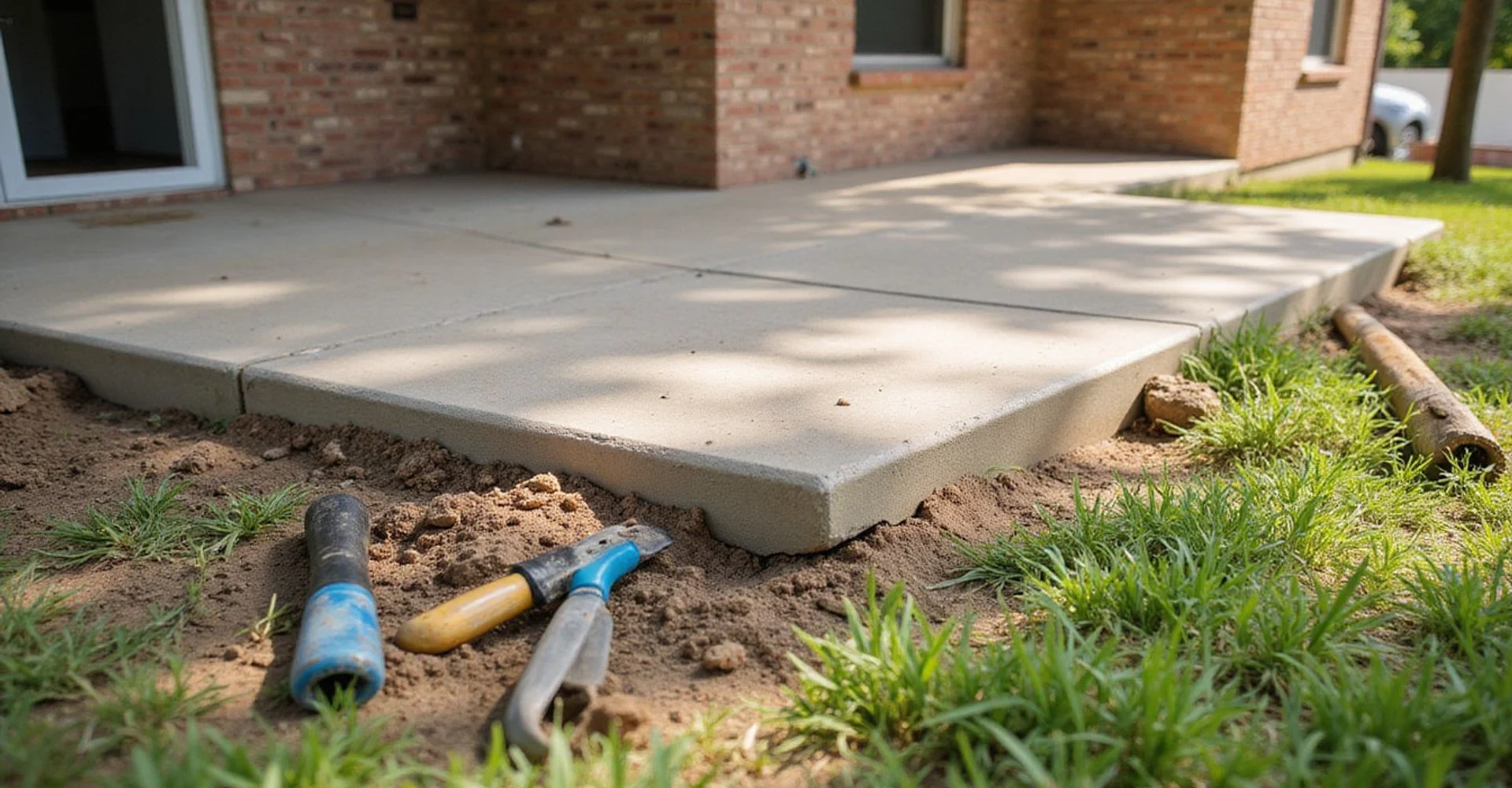
Repair for slab-on-grade foundations: what evaluation examines, the approaches that may apply, and how access and restoration factor into scope.
House Leveling
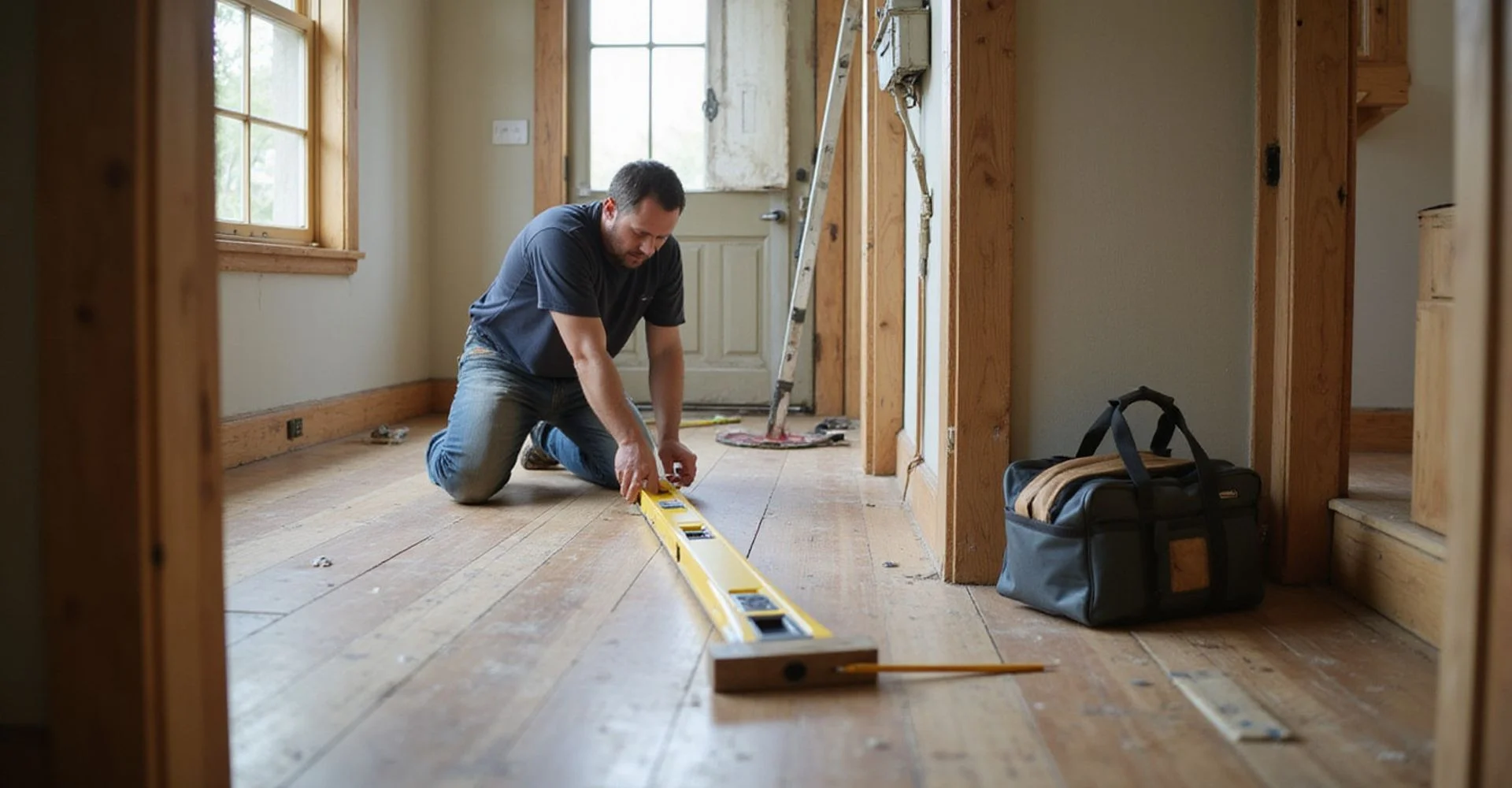
How leveling relates to foundation repair, what it can realistically achieve, and the limits worth understanding before you start.
Ready to talk about concrete leveling?
Request a quote and we will explain the findings before anyone discusses scope.
- Written scope and exclusions
- No diagnosis from photos
- Licensed and insured in Texas