
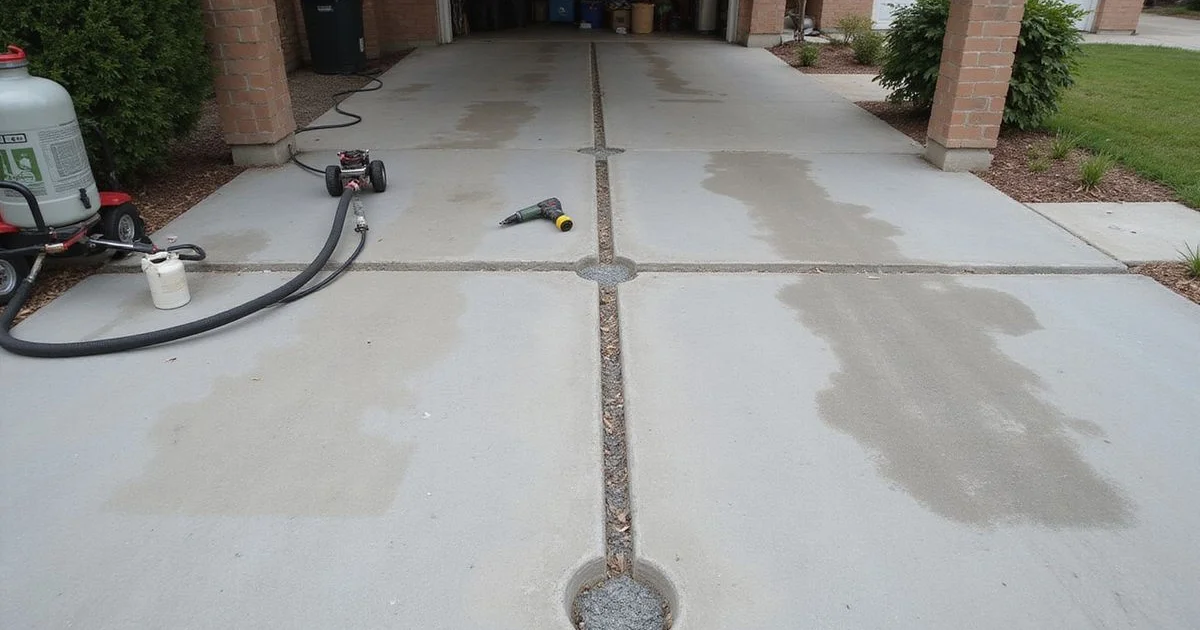
Two ways to fill the same void
Both methods do the same fundamental thing: inject material beneath a settled slab to fill the space underneath and raise the concrete. They differ in what gets injected, and that difference has practical consequences.
If you are still working out whether your flatwork is a candidate at all, start with concrete leveling, which covers what the service addresses.
Polyurethane foam injection
A two-part expanding polymer is pumped through small ports, commonly around the diameter of a pencil. The components react and expand in place, filling the void and lifting the slab.
Characteristics. Lightweight, so it adds very little load to sub-base that may already be questionable. Cures quickly, often allowing return to use within hours. Resists water washout well because the cured foam does not erode the way a cementitious material can. Small, less conspicuous injection holes.
Trade-offs. Higher material cost. Requires specific equipment and trained operators. The expansion has to be controlled carefully, because the lifting force is substantial.
Mudjacking
A cement-based slurry, sometimes called grout or mud, is pumped through larger holes, commonly an inch or more across. The material fills the void and raises the slab by volume.
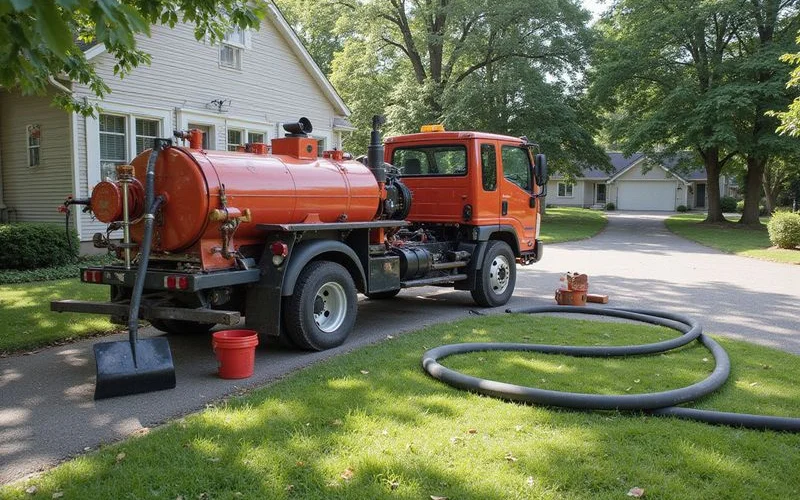
Characteristics. Material cost is generally lower. The mix is closer in density and behaviour to the original sub-base, which some situations favour. Long-established method with widely available expertise.
Trade-offs. The material is heavy, which adds load to sub-base that may be part of the problem. Longer cure time before vehicle loading. Larger holes that are more visible after patching. More susceptible to washout where water movement continues.
Side by side
| Polyurethane foam | Mudjacking | |
|---|---|---|
| Injection hole size | Small, around pencil diameter | Larger, typically an inch or more |
| Material weight | Very light | Heavy |
| Cure time | Fast, often hours | Longer, particularly before vehicles |
| Washout resistance | High | Lower |
| Material cost | Higher | Lower |
| Equipment | Specialist | Widely available |
| Visual impact of patches | Less noticeable | More noticeable |
| Void volume tolerance | Good | Good, but material volume drives cost |
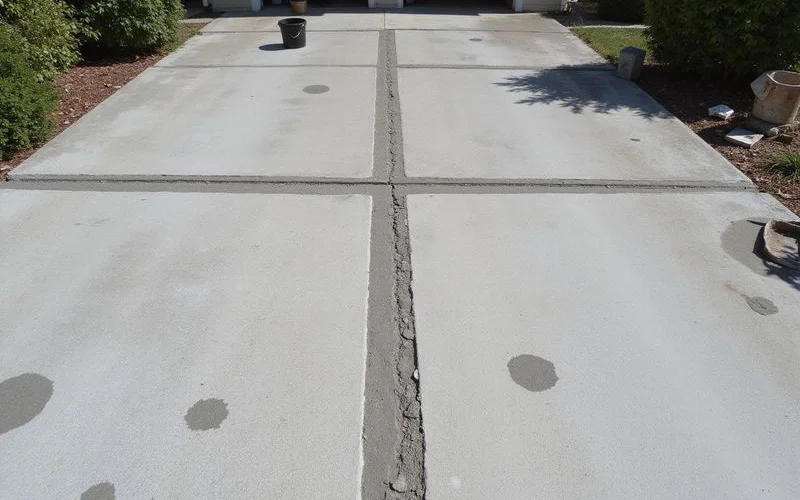
Where each tends to fit
Foam suits situations where weight matters because sub-base is weak, where fast return to use is important such as a driveway you need that evening, where minimal hole size is desirable on a visible surface, and where water movement through the area is an ongoing concern.
Mudjacking suits situations where a large void volume would make foam material cost prohibitive, where the heavier material better matches conditions, and where budget is the dominant constraint and the surface is not highly visible.
Beware the company that only ever offers one
That is not automatically a problem, but the recommendation may reflect their equipment rather than your slab. Ask why the method was selected and what the alternative would have involved.
What matters more than the method
The cause. A void forms because something removed material from beneath the slab, and that is usually water. Lifting a driveway while a downspout continues washing out the sub-base beneath it is temporary by design.
A proposal should identify the likely cause and say whether correcting it is in scope, alongside it, or your responsibility. That conversation matters more than the material debate.
Also worth confirming: whether the plan preserves drainage slope away from the house rather than aiming for dead level, expected return-to-use time, hole patching, and whether expansion joint sealing is included. Our guide on what affects concrete leveling cost covers how these items are priced.