
Foundation Warning Signs Austin Homeowners Notice
What common foundation observations may indicate, what cannot be judged from appearance, and when to get an evaluation.
- Overview of common visible observations
- Observation-versus-diagnosis framing
- What an evaluation involves
- 4.9 (300+ Google reviews)
- Licensed & insured in Texas
- Fast Local Response
- Written Scope & Warranty
Why Homeowners Look Into Warning Signs
A crack appeared and you cannot tell if it matters
A crack is an observation, not a diagnosis. Width alone does not settle whether it is seasonal movement or something worth measuring.
Crack-width rules online do not agree with each other
Universal rules of thumb ignore your specific soil, slab and history. They are not a substitute for a measured evaluation.
You do not want to be sold work you do not need
Plenty of what homeowners notice turns out to be seasonal or cosmetic. We would rather tell you that than recommend work that is not warranted.
You are not sure what to document before anyone visits
Photos, dates, and a note on whether it has changed all make an evaluation more useful once someone does come out.
Observation is not diagnosis
Something changed in your house and you want to know whether it is serious. That is the question this page exists to help with, and the first honest answer is that what you can see is a starting point, not a conclusion.
A crack is an observation. A diagnosis requires knowing how your floor sits relative to itself, how water moves around the perimeter, what the foundation type is, what was there before, and whether anything is progressing. None of that is visible in the crack.
That distinction is not hedging. It is the difference between a company that measures and one that sells from the driveway. Being told over the phone that your photo shows a serious problem should make you less confident in the caller, not more.
The observations homeowners bring us most
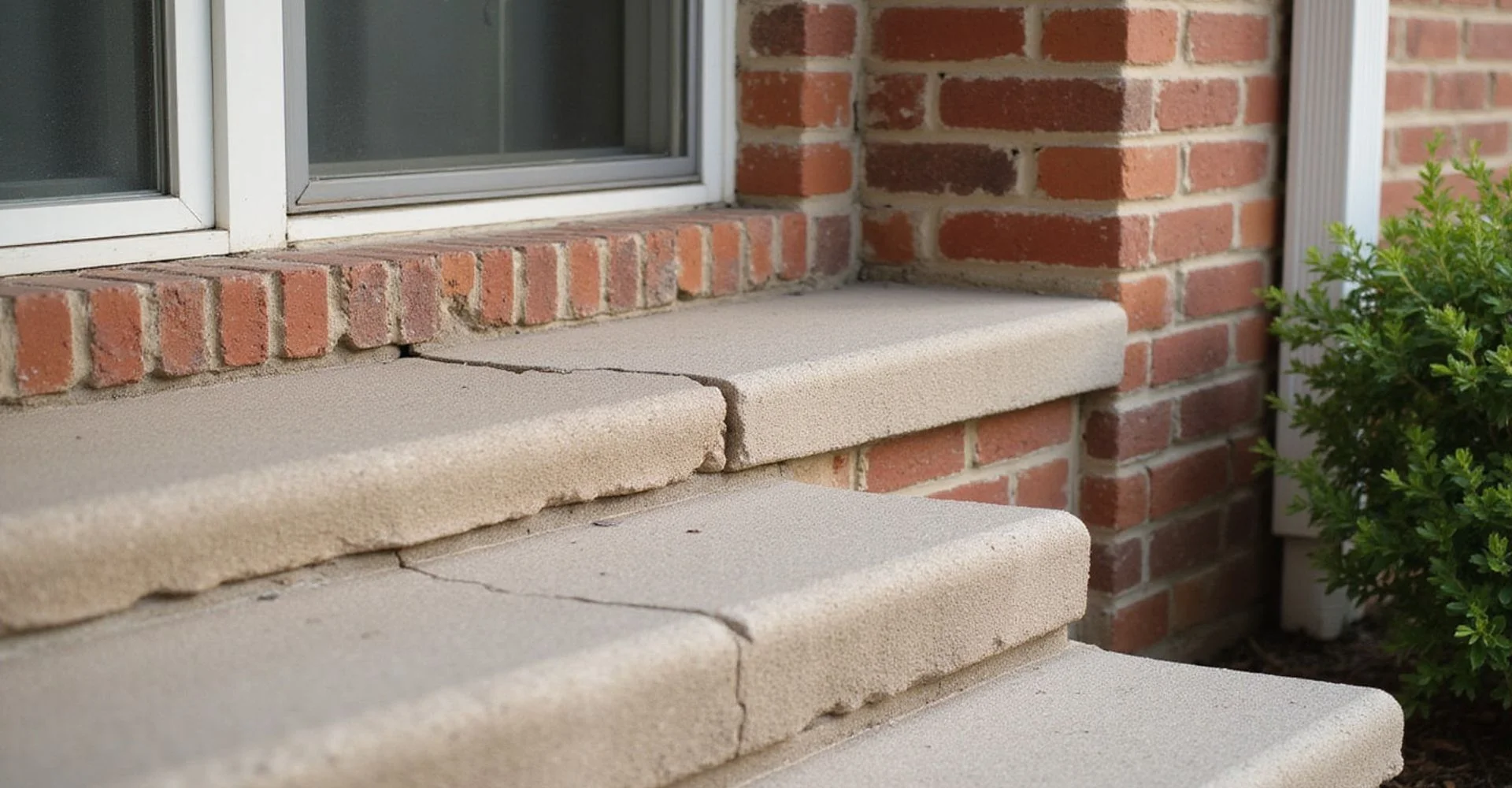
Stair-step cracks in brick veneer. Cracking that follows mortar joints in a diagonal staircase pattern, usually near corners, windows or doors. It is a recognised movement cue and it is worth recording. It is not a severity scale, and the width of the joint separation does not tell you how much the foundation has moved.
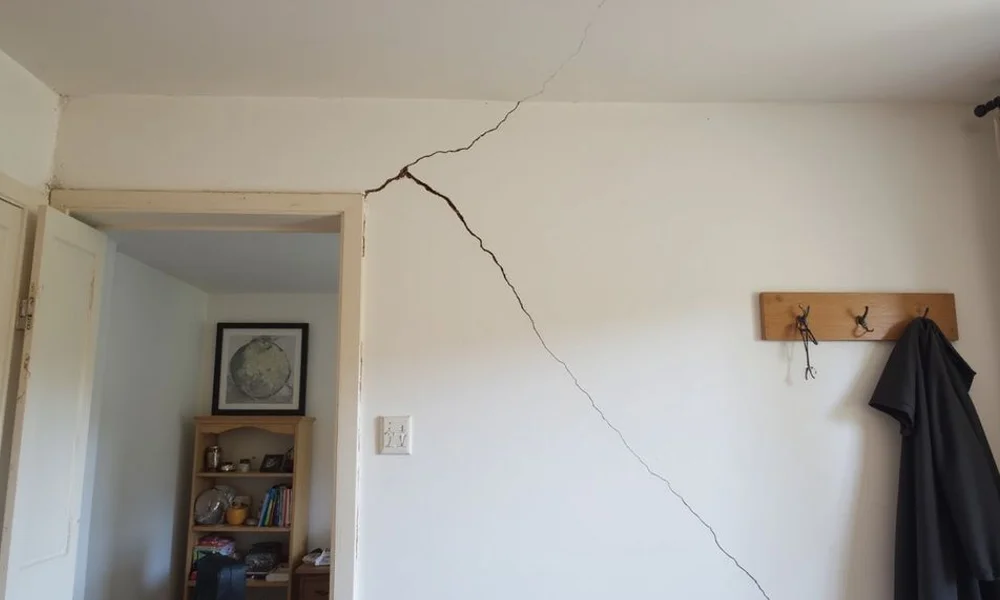
Interior wall and ceiling cracks. Diagonal cracks running from the corners of door and window openings are the more informative ones, because openings concentrate stress. Fine straight cracks along a drywall seam, or hairlines at a ceiling junction, frequently come from finish movement, framing shrinkage or seasonal humidity rather than the foundation.
Sticking doors and windows. A door that has stopped latching, or a window that no longer closes squarely, can reflect the opening going out of square. It can equally reflect timber swelling in humid weather or hinges that have worked loose. What makes it more interesting is several doors across different parts of the house changing at the same time, or the change persisting across a full season.
Uneven or sloping floors. Noticeable slope, a ball that rolls, bounce underfoot in a pier-and-beam home, or tile cracking in a line. Slope in an older house is often partly original. Measurement is what separates original from later movement.
Gaps at trim and openings. Separation between baseboard and floor, gaps opening at door casings, crown moulding pulling away from a wall. Useful because gaps that appear and then widen tell you something a static crack does not.
Exterior separation. A porch pulling away from the house, soil pulled back from the slab edge, masonry separating at a corner, or a garage door frame going out of square. Worth photographing because exterior movement is often easier to track over time than interior cracking.
What cannot be determined from appearance alone
Several things, and it is worth being specific.
Severity. No crack width rule declares a home safe or unsafe. Crack width appears in some engineering damage classifications, but those are applied by qualified people alongside other evidence, not read off a tape measure by itself.
Cause. Settlement, upheaval, drainage, an under-slab plumbing leak, framing movement, original construction and thermal effects all produce visible cracking. Appearance alone rarely separates them.
Direction of movement. Whether a section of a house has dropped or been lifted changes the response entirely, and it is not readable from a photograph. Settlement and upheaval need different approaches.
Progression. The single most useful piece of information about a crack is whether it is moving, and that requires either your own dated records or repeat measurements against a fixed baseline.
Why Austin properties vary so much
Central Texas ground is unusually variable. Expansive Blackland Prairie clay dominates east of the I-35 corridor, swelling and shrinking substantially with moisture. Edwards limestone and caliche dominate to the west, with rock often close to the surface and its depth varying across a single lot. The Balcones Fault Zone sits between them, and it contains multiple faults rather than one neat line, so I-35 is a convenient shorthand and not a geological boundary.
Layer on top of that the site-specific factors: fill placed during construction, re-graded yards, mature trees drawing moisture from one side of a house, drainage swales that have been blocked by a fence or a shed, irrigation running against a slab edge. Two houses on the same street can behave completely differently, which is why mapped soil data is background context and on-site investigation is what actually answers the question.
What to document before anyone visits
This genuinely improves the quality of the assessment.
Photograph each observation with something for scale and note which room or elevation it is on. Write down roughly when you first noticed it and whether it has changed since. Note anything that changed around the same time: a drought, a very wet period, a tree removed or planted, plumbing work, a new patio, re-grading. Gather prior repair records, warranties and any previous engineering reports. Do not fill or paint over cracks first.
Our guide on what to document before a foundation evaluation has the full list.
What happens next
The useful next step is a foundation evaluation: relative elevation readings across the living areas, a drainage and grading review, your observations recorded properly, and history taken into account. You receive written findings including what could not be established from one visit.
From there, three outcomes are all legitimate. Repair, where the readings support it. Targeted drainage or moisture correction, where uneven moisture is the contributing factor. Or a documented baseline and a check in six to twelve months, where nothing currently warrants work. We will tell you which one your readings point to, including when that answer is the third one. That evidence-first sequence is how our foundation repair company in Austin approaches every property.
What Drives the Cost of Warning Signs?
We do not publish a headline price for this work, because a number without a scope is not useful to you. These are the factors that actually move a proposal up or down.
| Factor | Why it changes the number |
|---|---|
| Whether measurement is needed | Some observations resolve with context alone. Most warrant relative elevation readings, which is where an evaluation begins. |
| Foundation type | The same visible sign points to different assessments on a slab versus a pier-and-beam home, and pier-and-beam adds a crawlspace inspection. |
| Whether movement is progressing | A single visit establishes a baseline. Determining progression requires repeat readings over time, which affects how a recommendation is staged. |
| Possible plumbing involvement | Where signs suggest upheaval rather than settlement, plumbing testing by a licensed plumber may be the necessary next step rather than structural work. |
| Drainage correction | Where uneven moisture is contributing, grading and drainage changes are often the cheapest useful action and may be recommended before anything structural. |
For a broader breakdown, read how much foundation repair costs in Austin and how to compare quotes .
Ready to get warning signs findings in writing?
Request a quote and we will explain what an evaluation can and cannot determine before you commit to anything.
Why Choose Us for Warning Signs
We do not diagnose from photos
A photo shows a crack. It does not show elevation, drainage, history or soil. Anyone quoting from an image is guessing.
No crack-width rules
There is no universal width that makes a home safe or unsafe. Location, pattern and progression carry far more information than a number.
One observation is not proof
A single sign rarely means much. A pattern across several, tied to measurements, is what actually supports a conclusion.
We name other causes
Humidity, hardware, framing shrinkage and original construction all produce signs that look structural. We say so when they apply.
Monitoring is a real answer
Sometimes the honest recommendation is a documented baseline and a check in six months. That option is on the table here.
Clear next steps either way
You leave knowing what to watch, what to document, and what would change the recommendation.
How Our Warning Signs Process Works
- 1
Notice and record
Photograph what you see with locations, and write down when it appeared and whether it has changed. Do not fill cracks before an assessment.
- 2
Rule out the obvious
Seasonal humidity, hardware and normal finish movement explain plenty. Context narrows the field before anyone takes a reading.
- 3
Get relative elevations
An evaluation maps how the floor sits relative to a baseline, which is what turns a set of observations into something interpretable.
- 4
Decide with the findings
Repair, targeted drainage correction, or documented monitoring. All three are legitimate outcomes depending on what the readings show.
What Warning Signs Looks Like
Access, conditions and restoration vary by property. These images show the kind of work and conditions involved.
Illustrative images, not documented records of specific customer projects.
What Customers Say About Our Warning Signs
Feedback from homeowners who wanted an explanation first and a quote second.
“The doors started sticking after a dry summer and I assumed the worst. The elevation readings gave me something concrete to work from instead of guesswork.”
“Straightforward and unhurried. They answered every question I had about what the readings meant.”
“I expected a sales pitch and got an explanation instead. The written summary was genuinely useful.”
Reviews shown are representative of the feedback we receive. We publish permissioned customer reviews only and never invent projects, measurements or outcomes. Read more about our review policy.
Warning Signs FAQs
Is a crack in my wall a sign of a serious foundation problem?
Not necessarily. A crack is an observation, not a diagnosis. Width or shape alone cannot confirm whether a home is safe or needs repair. What it means depends on factors an on-site evaluation considers, including relative elevations, drainage, foundation type and history.
Which cracks matter most?
Location and pattern carry more information than width. Diagonal cracks from door and window corners, stair-step cracking in brick veneer, and cracks that show vertical displacement across the opening tend to be more informative than fine straight cracks in the middle of a wall.
Should I fill a crack before someone looks at it?
No. Filling hides the cue and makes progression much harder to judge. Photograph it, note the date and location, and leave it until it has been assessed.
My doors suddenly stick. Is that the foundation?
Sometimes. It is also a classic symptom of seasonal humidity swelling timber, and of hinges and hardware working loose. What raises the question is several doors across different parts of the house changing at once, or sticking that persists across seasons.
How much floor slope is normal?
Some deviation is present in almost every house, particularly older ones where original construction was never flat. There is no single tolerance that applies to every property. Significance comes from the pattern of readings, the pace of change and the construction type.
What is the difference between settlement and upheaval?
Settlement is downward movement, typically where soil has shrunk or consolidated. Upheaval is upward movement, often where soil has swelled from moisture, sometimes from an under-slab plumbing leak. They produce different patterns and call for different responses, which is why the distinction is worth establishing.
Can I measure my floors myself?
A long spirit level or a marble will tell you roughly whether a floor slopes, which is worth knowing. It will not produce a relative elevation map across the house, and it will not tell you whether the pattern is consistent with foundation movement or with original construction.
What if the signs are seasonal?
Seasonal opening and closing of cracks is common on expansive clay and is not by itself a reason to undertake structural work. What matters is whether the baseline is shifting year on year, and that takes repeat readings against a fixed datum to establish.
Still have a question?
If your situation isn't covered here, ask us directly. We'll tell you what an evaluation can and cannot answer.
Ask About Your FoundationRelated Services

Foundation Evaluation
What an evaluation examines, who attends, the written deliverables you receive, and the next steps toward a quote.
Slab Foundation Repair
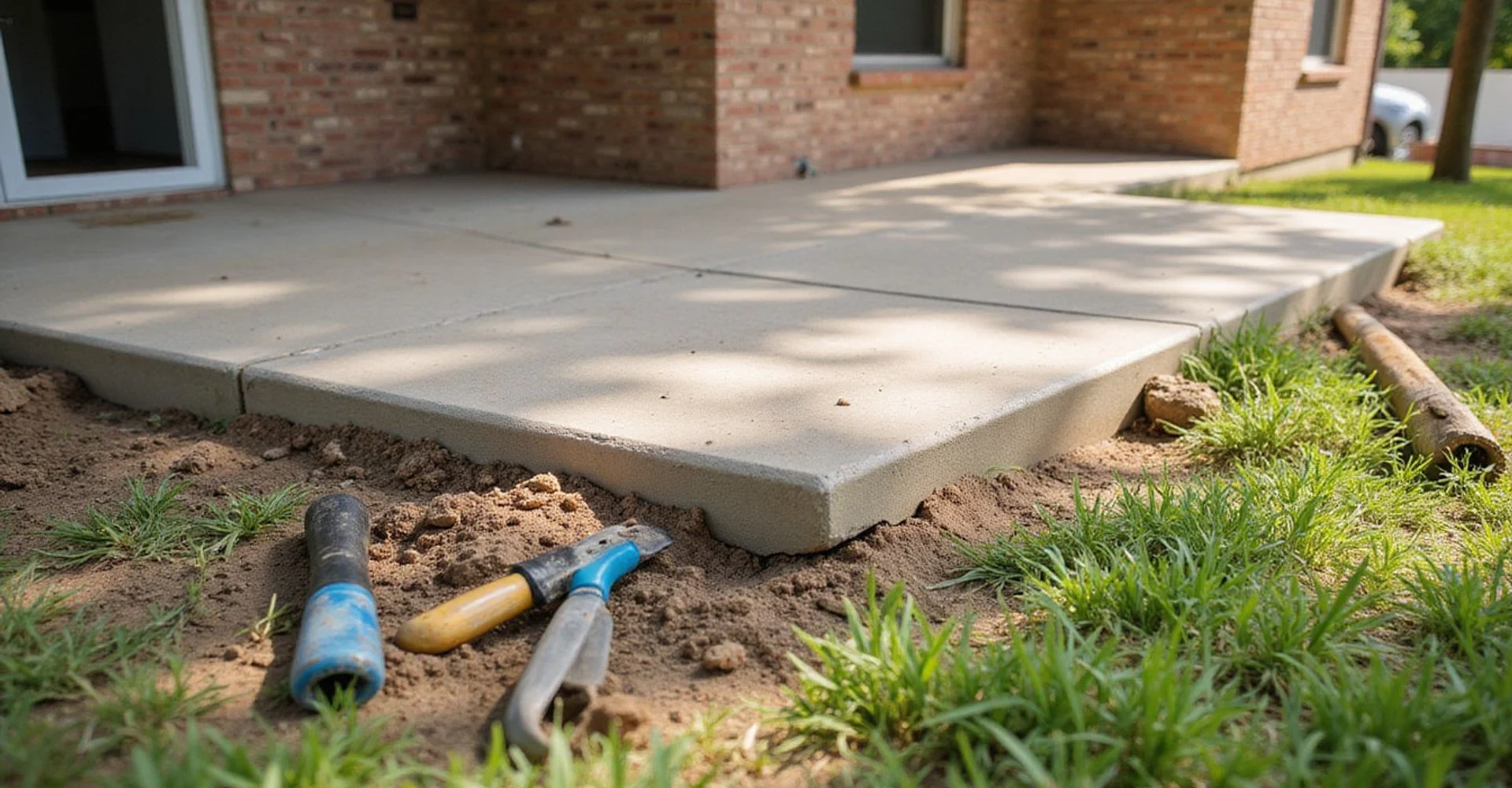
Repair for slab-on-grade foundations: what evaluation examines, the approaches that may apply, and how access and restoration factor into scope.
Pier-and-Beam Repair
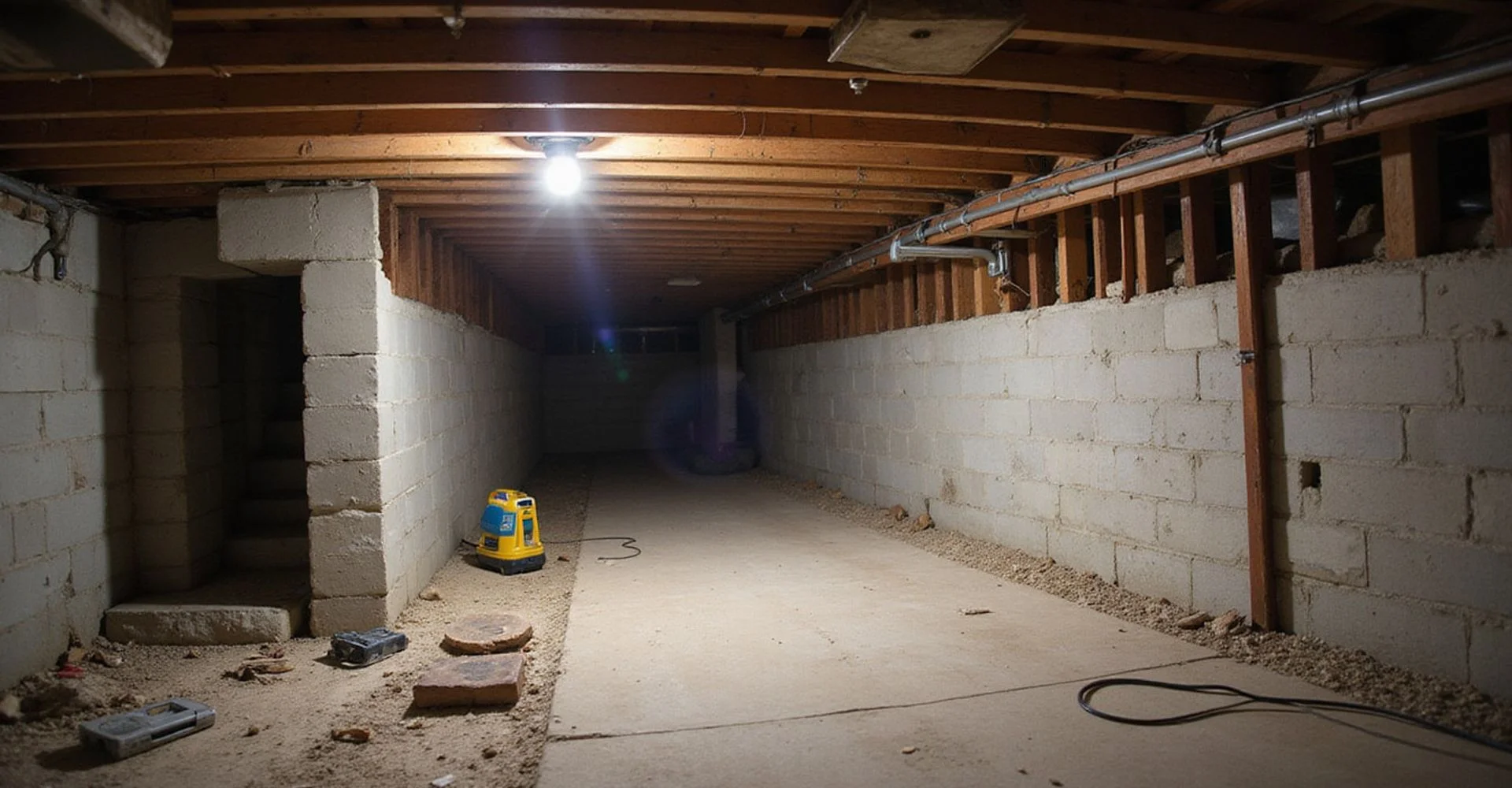
Repair for pier-and-beam foundations: piers, beams, joists, crawlspace moisture and deterioration, plus realistic leveling objectives.

Ready to talk about warning signs?
Request a quote and we will explain the findings before anyone discusses scope.
- Written scope and exclusions
- No diagnosis from photos
- Licensed and insured in Texas