
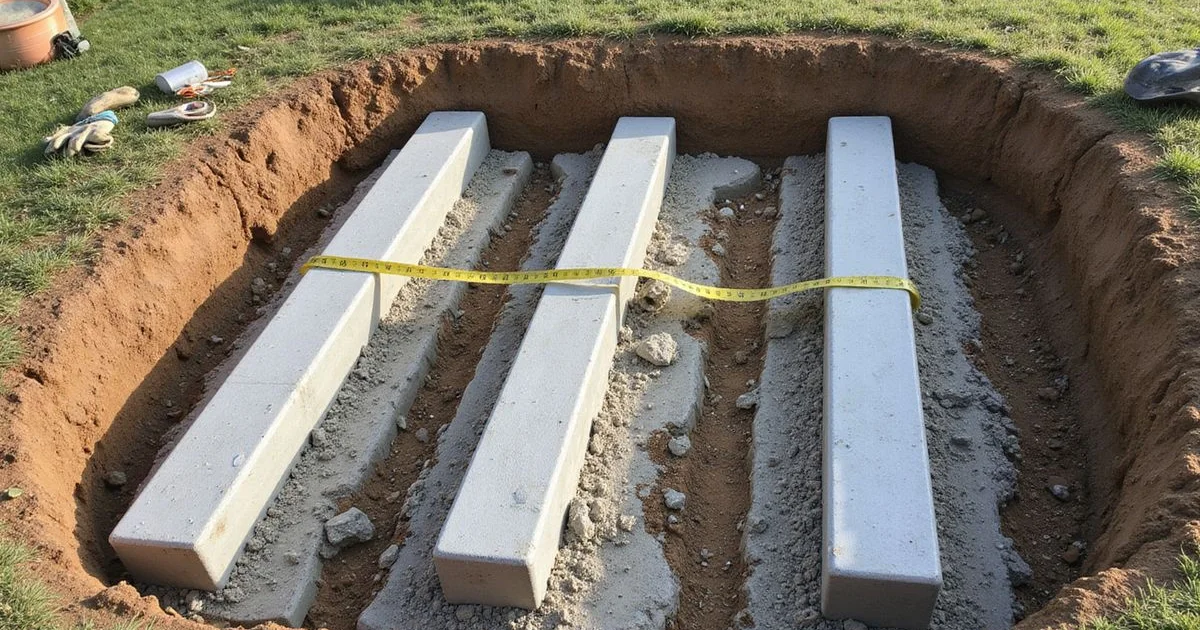
Why this comparison is usually presented badly
Search for this question and you will mostly find pages published by companies that install one of the two systems. Unsurprisingly, each concludes that its own method is superior.
The honest answer is that both work, both have limits, and the right one for your property depends on conditions at your address. This guide sets them side by side without a thumb on the scale. For how each works in detail, see foundation repair methods.
The two systems in one paragraph each
Steel push piers. Sections of steel pipe driven hydraulically beneath the foundation, using the weight of the structure as reaction, until resistance is sufficient to carry load. Installation pressure gives a measurable indication of capacity as the work proceeds.
Concrete piers. Either precast cylinders pressed into the ground segment by segment, carrying load through end bearing and skin friction, or piers formed in place in an augered hole with reinforcement and poured concrete.
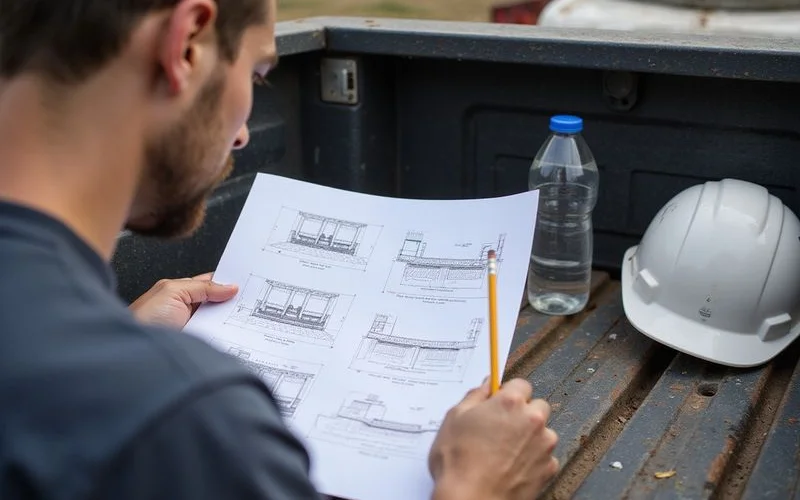
Side by side
| Steel push piers | Pressed concrete piers | Drilled concrete piers | |
|---|---|---|---|
| Installation | Driven hydraulically | Pressed segment by segment | Augered, reinforced, poured |
| Typical reach | Deeper | Shallower | Designed depth |
| Load mechanism | Primarily end bearing at refusal | End bearing plus skin friction | Designed bearing and friction |
| Capacity verification | Installation pressure | Installation observation | Engineered design |
| Reaction load needed | Yes, from the structure | Yes | No |
| Access requirement | Moderate | Moderate | Drilling rig |
| Cure time before loading | None | None | Yes |
| Cost per location | Generally higher | Generally lower | Varies, often highest |
The trade-offs that actually matter
Depth. If competent bearing material is deep, steel’s reach can be decisive. If it is at moderate depth, pressed concrete may be entirely appropriate and cheaper.
Reaction load. Steel and pressed systems both push against the structure. On lightly loaded sections such as a porch or a single-storey corner, that can be a genuine constraint. Drilled piers do not have this limitation.
Verification. Steel’s installation pressure provides a running indication of capacity. Drilled piers derive their capacity from an engineered design. Pressed piers rely more on installation observation and experience.
Access. Drilled piers need a rig, which rules them out in tight spaces and most interior work. Steel and pressed systems work in narrower conditions.
Obstructions. Buried debris, old footings and shallow rock can cause premature refusal on any driven or pressed system. West of the Balcones transition, where limestone can be close to the surface and its depth varies, that is a live consideration.
The choice should be traceable to findings
If a proposal names a system, ask what about your site led to it. A clear answer referencing soil, depth, load or access is a good sign. A brand name or a warranty claim is not an answer.
What should decide it
Soil profile and depth to competent bearing material at your address. Structural loads at each proposed location. Access, including equipment reach and whether interior work is involved. Any engineering requirement governing the design. And how capacity will be verified and documented.
None of those are knowable from a photograph, a neighbourhood, or which side of the highway you live on. They come out of a foundation evaluation and, on complex sites, an engineered plan.
A practical way to compare proposals
Ask each company the same three questions. Why this system for this site? What depth do you expect and what is that based on? What happens if actual conditions differ from the expectation?
Companies that answer those clearly are assessing your property. Companies that pivot to a brand, a lifetime warranty or a discount that expires today are doing something else.
If you want each system on its own terms first, read how steel piers work and where they fit and how concrete piers work and where they fit.