
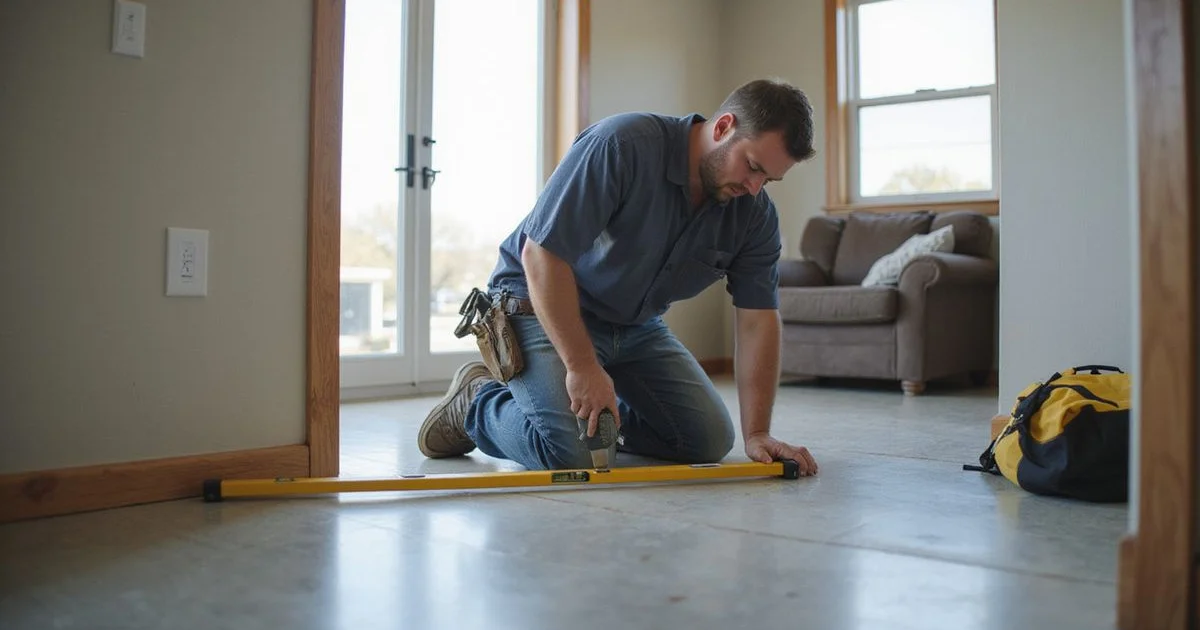
Two words that get used interchangeably
Ask three companies about a sloping floor and you will hear “leveling” and “foundation repair” used as though they mean the same thing. They overlap, but treating them as identical causes real confusion when you are comparing proposals.
House leveling means adjusting a structure back toward an acceptable elevation tolerance. Foundation repair means correcting or adding support so the structure is stable. One is about position; the other is about support.
Why the distinction matters commercially
Because you can buy one without much of the other, and you should know which you are getting.
Stabilisation stops the movement. Supports are installed or corrected, load is transferred, and the structure is no longer riding on soil that is failing it.
Elevation recovery brings some of the lost position back. It happens through the same work, but how much is achievable depends on the structure, its finishes and how long it has been in its current position.
A proposal that implies you are buying both while only scoping one is the thing to watch for. Ask directly: what is the target elevation, how will it be verified, and what happens if the structure will not tolerate that much recovery.

How it is done depends on the foundation
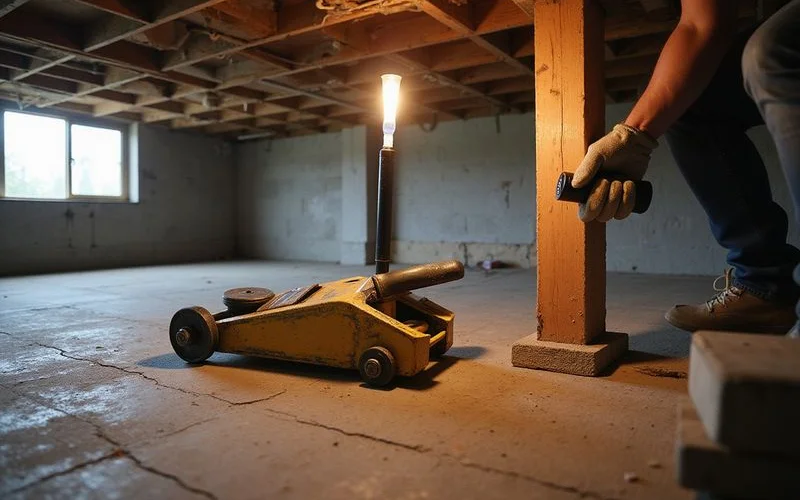
Pier-and-beam. Adjustment is mechanical and happens in the crawlspace: shims at pier caps and adjustable screw-jack posts, with temporary cribbing and jacks carrying load meanwhile. It is incremental, checkable and reversible.
Slab-on-grade. Adjustment happens through the supports installed as part of foundation repair. Once supports reach competent bearing material, load is transferred in a controlled sequence and some recovery may follow. The slab is continuous, so lifting one area affects adjacent areas.
When leveling applies
| Situation | Is leveling the right frame? |
|---|---|
| Doors and windows out of square | Often yes |
| Noticeable slope affecting use of a room | Often yes |
| Bounce in a pier-and-beam floor | Support or framing first, not leveling |
| Cracking with no measurable deviation | No, investigate other causes |
| Deviation that is original to the house | Usually no |
| Deviation that is stable and not causing problems | Monitoring may be sufficient |
That last row deserves emphasis. A house that has been sitting in the same position for twenty years, with finishes adapted to it and no functional problems, is not automatically a candidate for adjustment. Movement and deviation are different things.
Stabilise first, then consider recovery
Where movement is active, stopping it matters more than correcting position. Recovery attempted before the cause is addressed simply moves the structure to a new wrong place.
Realistic expectations
No house ends up perfectly level, including new ones. Older Austin homes were built to tolerances that would not pass today, and a century of settlement has been absorbed by plaster, trim, tile and plumbing.
The realistic objective is a reasonable tolerance, improved function, and sound support. Some cosmetic movement during adjustment is normal and should be planned for.
Our guide on the house leveling process and its limitations covers what actually happens during the work and what to expect afterwards.