

Prior repair is information, not a verdict
We know a listing that discloses previous foundation work triggers an instinctive flinch for many buyers, and it really should not. Buying a house with foundation repairs simply means a previous owner proactively addressed a known structural issue.
Our team has evaluated thousands of properties across Central Texas, where expansive Houston Black clay and variable ground make soil movement highly common. A house with documented foundation repair and a transferable warranty can actually be a much better proposition than an untouched house of exactly the same age. We recommend reading our complete overview of foundation repair in Austin, which explains why average 2026 repair costs between $5,000 and $8,500 often scare buyers away prematurely.
What really matters is the verifiable paper trail you can establish.
Our guide covers exactly what to request, how to read those documents, and what steps to take when the records are thin.
What to request from the seller
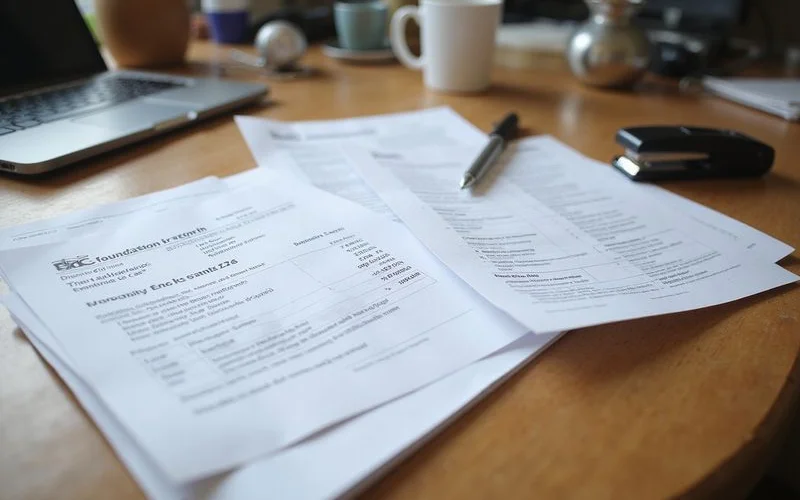
We need to request specific, detailed documentation from the seller to separate reliable fixes from temporary patches. A proper paper trail, such as the initial repair scope and final engineering reports, protects your investment and answers essential questions about the property history. Our mandatory checklist for any home with previous foundation repair includes several non-negotiable items.
- The repair scope: Do not settle for just an invoice total. The document should name the specific work locations, the system used, and what the work was intended to address. A one-line receipt saying “foundation repair” is a massive warning sign.
- Invoices and proof of payment: Establishing that the work described was actually carried out and paid for proves the contractor will honor future claims.
- Any engineering report or plan: If a licensed Professional Engineer was involved, that document is the most useful thing in the file. It tells you what an independent professional concluded before the work and sometimes after it.
- Permits and inspection records: Look for documents showing regulatory compliance where the jurisdiction required them. Their absence on structural work is worth asking about immediately.
- The warranty document: You need the complete packet including all fine print. This must list specific exclusions and exact transfer terms rather than a basic summary page.
- Post-work elevation readings: Where they exist, they are the best available record of where the structure finished.
Our experience shows that a standard ASCE structural engineer report usually costs around $500 to $750 in 2026. This small investment provides immense clarity on what exactly took place underneath the home.
Read the documents for what they do not say
Identify Geographic and Seasonal Gaps
We must analyze the gaps in the paperwork just as closely as the words on the page. A repair covering the north and east elevations tells you absolutely nothing about the south and west. Warranty coverage attaches specifically to repaired locations, not to the whole foundation.
Our experts always check the exact date of the recorded work. Work carried out fifteen years ago sits in a completely different context from work completed last spring. This distinction matters deeply given how sharply Central Texas weather cycles between severe drought and heavy rain, especially over the 2025 and 2026 seasons.
Verify Contractor Status and Scope
We also look for any proposed work that was left incomplete. Proposals sometimes include items the owner declined to fund. If the file contains a recommendation that was never executed, you need to know about that skipped maintenance.
Our final step in document review is verifying the contractor status. A company still actively trading is a company that can actually honor a transferable warranty. One that has dissolved cannot help you, regardless of what the formal paperwork promises. Under Texas Property Code Section 5.008, a seller must provide a Seller’s Disclosure Notice, but they are only legally obligated to disclose defects they actively know about.
Get your own baseline
We know that seller records only describe the past. An independent foundation evaluation describes the exact present condition of the property.
Relative elevation readings across the living areas tell you exactly how the structure sits right now. A drainage and grading review clarifies whether the conditions that contributed to the original movement have been addressed or still exist. Typical structural engineer inspections in 2026 run between $400 and $800 to verify these details.
Our team finds that on a pier-and-beam home, a crawlspace inspection reveals crucial details about wood condition that no paperwork will ever show. That evaluation also gives you a documented baseline in your own name, dated directly at purchase. If a question arises in three years, you have precise data to measure against.
Our clients appreciate knowing they can rely on hard facts rather than comparing old photographs and vague memories.
Ask whether anything has moved since the repair
A direct question to the seller, in writing. The answer, and the willingness to answer, both tell you something.
Warranty transfer, specifically
We see warranty transfers become needlessly complicated during real estate transactions all the time. Transfer terms often require formal notification within a strict window after closing, which is commonly just 30 days. Miss that narrow window and the foundation coverage can lapse permanently.
The process usually involves a standard transfer fee averaging between $200 and $250 in 2026, and occasionally requires a new inspection. Establish these exact terms during the option period rather than scrambling after closing, and put the transfer in motion immediately. Our detailed guide on foundation repair warranties sets out everything else you need to check before signing the final paperwork.
If you are the seller
We tell property owners that this exact same preparation list works perfectly in reverse. Selling a house with foundation repair requires you to gather the records before listing, rather than scrambling during a tight option period. Understanding the foundation repair disclosure Texas mandates is critical.
Under Texas Property Code Section 5.008, sellers must provide a formal notice detailing any known structural modifications or defects. Confirm whether your specific warranty transfers and what exact paperwork the process requires. Consider paying for current elevation readings so you can answer the inevitable buyer questions with a certified document rather than a simple verbal reassurance.
Our team has seen how highly organized documentation genuinely changes how a disclosed repair is received. Buyers are not primarily afraid of foundation work. They are simply afraid of not knowing what they are taking on.
A quick checklist for buying a house with foundation repairs
We recommend saving this exact table for your next property viewing or seller preparation meeting. Work through every item on this checklist during the option period, not after.
| Request | Why |
|---|---|
| Repair scope with locations | Defines what was and was not addressed |
| Invoices | Confirms the work happened |
| Engineering report or plan | Independent professional record |
| Permits and inspections | Regulatory compliance |
| Full warranty document | Coverage, exclusions, transfer terms |
| Post-work elevation readings | Where the structure finished |
| Independent evaluation | Current condition and your own baseline |
Everything on that list is much easier to obtain while the seller still actively wants the sale to close. Our best advice for anyone buying a house with foundation repairs is to demand written proof for every single claim. Take action today by organizing your paperwork or scheduling an independent structural evaluation to protect your investment.