
Two different roles, regularly blurred
You have noticed something, you have started calling around, and now you are being told different things by different people about who should look at it. This is one of the most confusing parts of the process, and it is confusing partly because the industry benefits from the confusion. For what our own side of that work involves, see our overview of foundation repair in Austin.
Here is the distinction stated plainly.
A foundation repair contractor carries out an evaluation, identifies observations, takes measurements, and scopes work. That company also performs and sells the repair.
A licensed Professional Engineer provides an independent structural opinion. They are licensed and regulated by the Texas Board of Professional Engineers and Land Surveyors, they carry professional responsibility for their opinion, and they are not selling you the remedy.
Both are legitimate. They are not substitutes for each other, and any contractor telling you their evaluation is equivalent to an engineering assessment is overstating their position.

What a contractor evaluation gives you
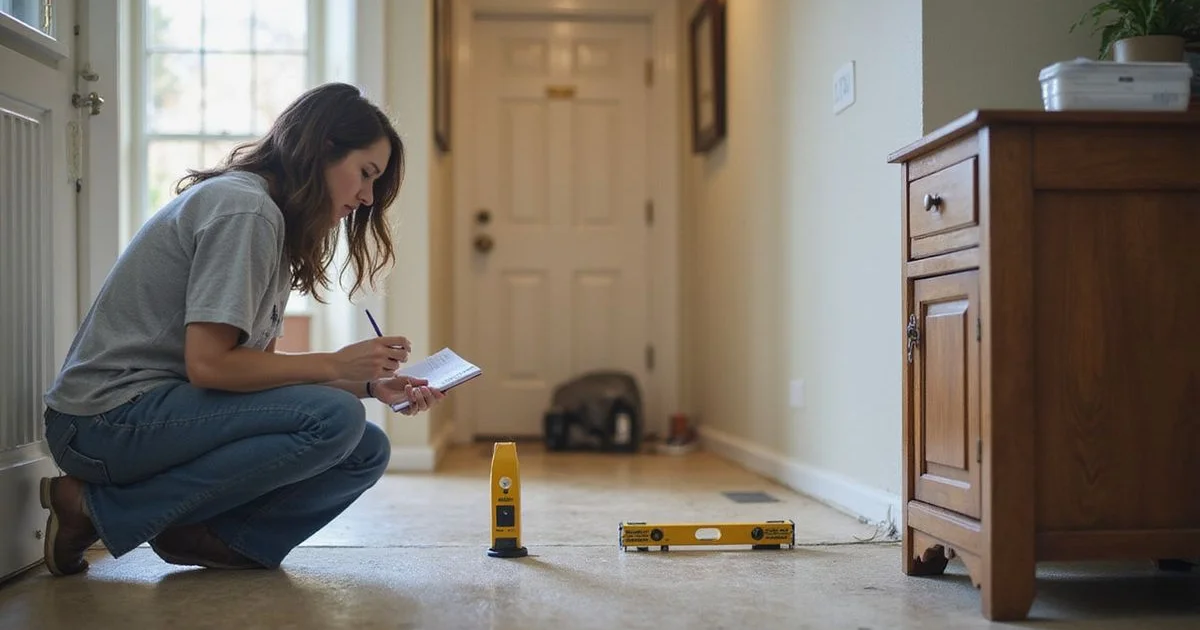
A good one, like our own foundation evaluation, includes relative elevation readings across the living areas, a drainage and grading review, documentation of your observations, crawlspace inspection where applicable, and a written summary of findings with clear next steps.
That is substantial and, for most situations, sufficient to make a sensible decision. It is also fast and usually cheaper than commissioning an engineer.
The honest caveat: it is produced by a party with a commercial interest in the outcome. A responsible contractor manages that by measuring, documenting, stating what cannot be determined, and being willing to conclude that no repair is needed. You should still factor the interest in.
What an engineering assessment gives you
An independent structural opinion, typically documented in a sealed report. Depending on the engagement, it may include an assessment of condition, an opinion on cause, a recommendation on whether repair is warranted, and sometimes a specification or plan setting out what should be done.
The value is independence and professional accountability. The engineer has no interest in whether twelve supports or twenty-two get installed.
The trade-offs are cost and timing. It is a separate engagement with its own fee, and availability varies. Some engineers provide plans that contractors then bid on; others deliberately stay clear of recommending companies.
When an engineering opinion is worth commissioning
When the decision is consequential. Large scope, significant expenditure, or a repair that will substantially change the structure.
When proposals disagree substantially. If one company recommends eight supports and another recommends thirty, an independent opinion resolves it in a way that a third contractor quote does not.
When a lender, insurer or legal process requires it. Some transactions simply need a sealed report.
When buying or selling. Particularly where prior repair is disclosed and you want an independent read on current condition.
When you want comparable bids. An engineered specification means contractors bid on the same defined scope, which makes price comparison meaningful instead of theoretical.
A contractor who tells you to get an engineer is not losing the job
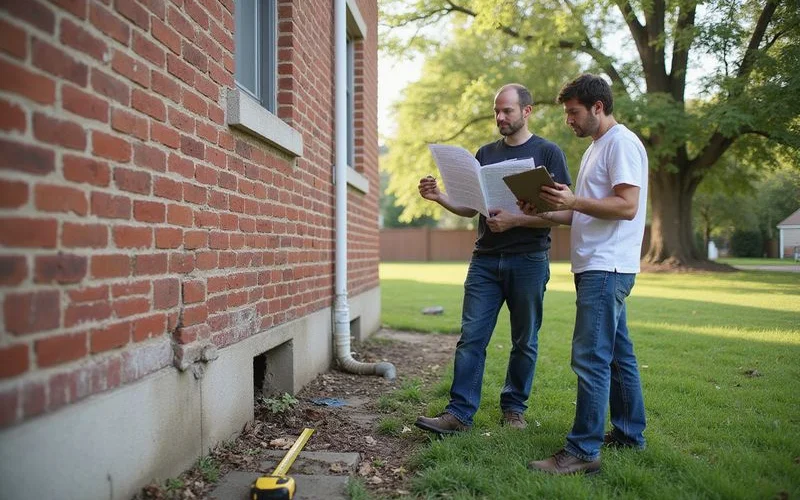
They are telling you where the boundary of their role sits. Treat that as a good sign rather than a deflection.
Side by side
| Contractor evaluation | Engineering assessment | |
|---|---|---|
| Who performs it | Repair company | Licensed Professional Engineer |
| Independence | Commercial interest in outcome | Independent of the repair |
| Typical output | Written findings and a proposal | Sealed report, sometimes a specification |
| Cost | Lower, sometimes no charge | Separate professional fee |
| Timing | Usually quick | Varies with availability |
| Best for | Understanding condition, scoping work | Consequential, disputed or regulated decisions |
| Regulated by | Business and contractor law | TBPELS |
A sensible sequence
For most homeowners noticing something for the first time, a contractor evaluation is the reasonable starting point. It is fast, it produces measurements, and it may conclude that no repair is warranted, in which case nothing further is needed.
Escalate to an engineer when the scope turns out to be large, when proposals disagree, when a transaction or lender requires it, or simply when you want an opinion from someone with no stake in the answer.
Whichever route you take, the written record is what makes the next decision easier. Our guide on comparing foundation repair quotes covers what each proposal should contain once you get to that stage.