
Start with what you can actually see
You have noticed something and you want to know whether the slab is the reason. This guide covers the observations that most often relate to slab movement, what each one can and cannot tell you, and what to record before anyone comes out.
The framing that matters throughout: these are observations, not diagnoses. A pattern across several, tied to measurements, is what supports a conclusion. One crack, on its own, does not. If you want the service context first, start with slab foundation repair.
Cracking in brick veneer
Stair-step cracks following mortar joints in a diagonal staircase pattern, usually near corners, windows or doors, are a recognised movement cue on slab homes. They appear because brick veneer is rigid and shows differential movement readily.
What they tell you: something moved relative to something else. What they do not tell you: how much, in which direction, whether it is still moving, or whether repair is warranted. Crack width is not a severity scale you can read off a tape measure.
Interior wall and ceiling cracks
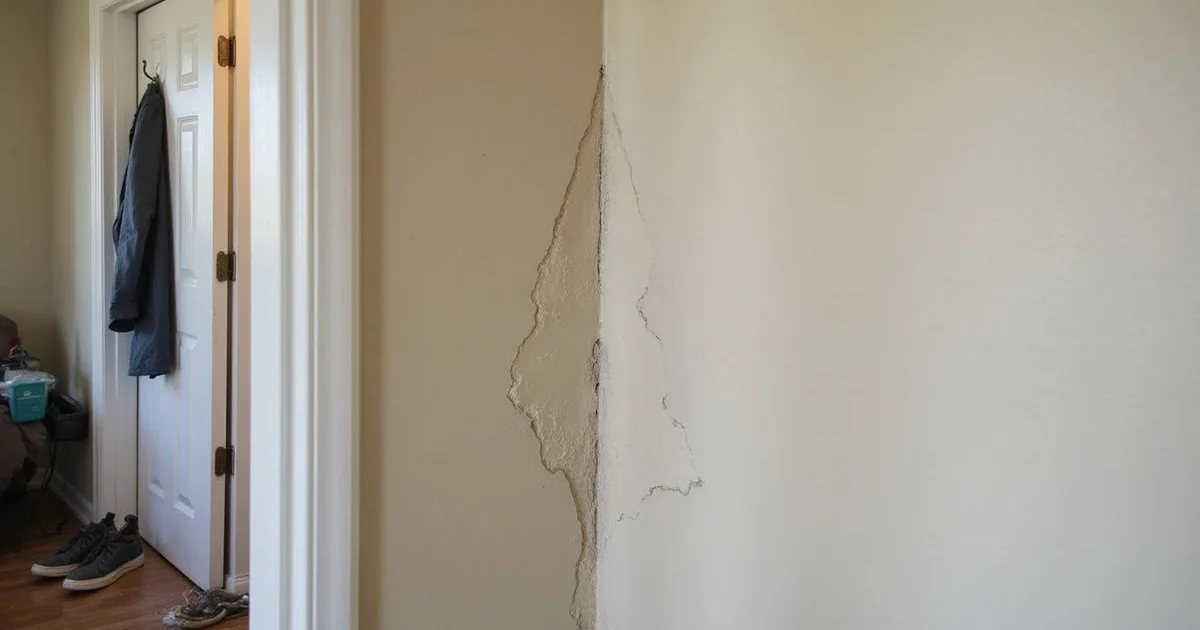
Diagonal cracks running from the corners of door and window openings are the more informative kind, because openings concentrate stress and show it first.
Less informative: fine straight cracks along drywall seams, hairlines where a ceiling meets a wall, and small cracks above a single door that appeared once and never changed. Those frequently come from finish movement, framing shrinkage or seasonal humidity.
Doors and windows that stopped working
A door that has stopped latching, drags on the frame, or shows an uneven gap along the top edge can indicate the opening has gone out of square.
It can equally indicate seasonal humidity swelling the timber, or hinges working loose. What makes it more interesting is several doors across different parts of the house changing at the same time, or the change persisting across a full wet and dry cycle rather than reversing.
Floor-level clues
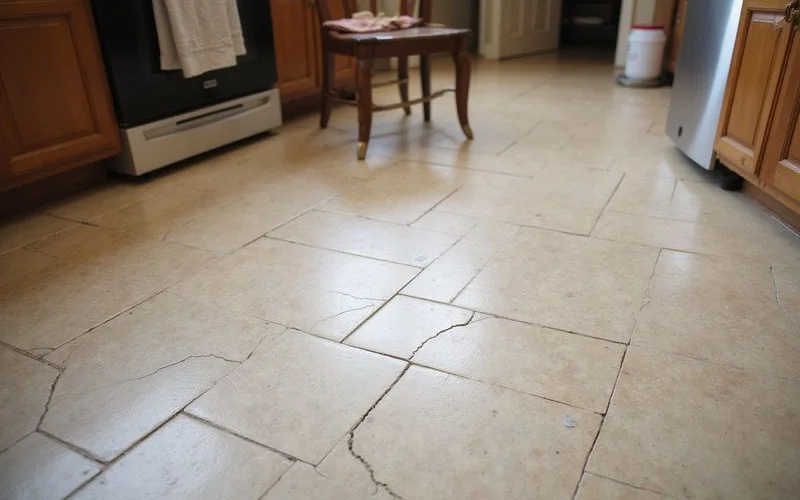
On a slab, floor covering often shows movement before the walls do. Cracked tiles running in a line rather than in one isolated spot, grout separating along a consistent path, vinyl or laminate lifting at a seam, or a noticeable slope across a room are all worth recording.
A slab that sits high near its centre relative to the perimeter is a pattern worth flagging specifically, because it raises the question of upheaval and possible under-slab plumbing involvement rather than settlement.
Gaps and separation
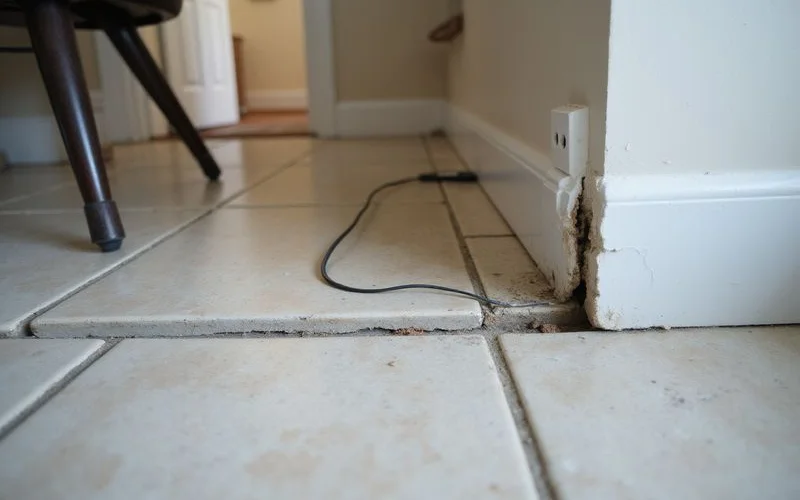
Separation between baseboard and floor, gaps at door casings, crown moulding pulling away from a wall, a porch or patio separating from the house, or a garage door frame going out of square.
Gaps are useful because they change visibly over time in a way a hairline crack does not. Photograph them with something for scale.
Do not fill before assessment
Filling a crack hides the cue and makes progression impossible to judge. Photograph, date, and leave it until it has been looked at.
What appearance cannot establish
| Question | Why appearance cannot answer it |
|---|---|
| How severe is it? | No universal crack width rule applies |
| What caused it? | Settlement, heave, drainage, plumbing and framing all produce similar cracking |
| Which direction did it move? | Requires relative elevation measurement |
| Is it still moving? | Requires comparison over time |
That list is exactly why anyone quoting from a photograph is guessing.
What to do next
Photograph everything with locations and dates. Note what changed around the same time. Walk the perimeter and look at drainage, downspouts and whether soil has pulled away from the slab edge. Check for signs of a plumbing leak such as an unexplained water bill or a persistently damp area.
Then get relative elevation readings. That single step converts a set of impressions into something interpretable, and it produces a baseline you own. Our overview of foundation warning signs covers the broader set of observations across both foundation types, and slab foundation repair explains what happens if the readings do point to work being warranted. For the mechanics of that work, what slab foundation repair involves walks through the support systems and how they are installed.