
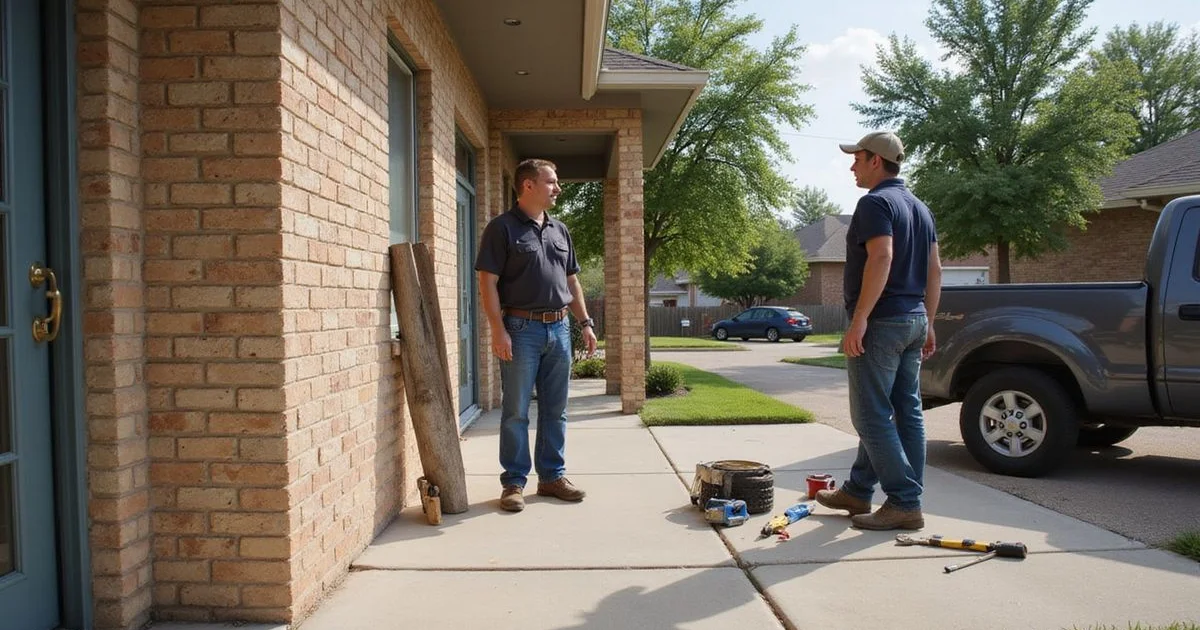
The question behind the question
When someone asks about replacement, they usually mean one of two things: either they have been told their foundation needs replacing and want a sanity check, or they are worried the problem is so bad that repair will not be enough.
The reassuring answer is that full slab replacement is genuinely rare, and slab foundation repair addresses the overwhelming majority of what we assess. The useful answer is understanding where the line actually sits.
Why repair is usually sufficient
In most projects, the concrete has not failed. The ground supporting it has changed.
Expansive clay swelling and contracting with moisture, fill consolidating, a plumbing leak saturating soil, a mature tree drawing water from one side: all of these change support without damaging the slab itself. Correct the support and the structure is stable again.
That is why targeted repair works. Supports are installed at specific locations determined by measurement, load is transferred, and the affected area is stabilised. The rest of the slab, which was never the problem, is left alone.
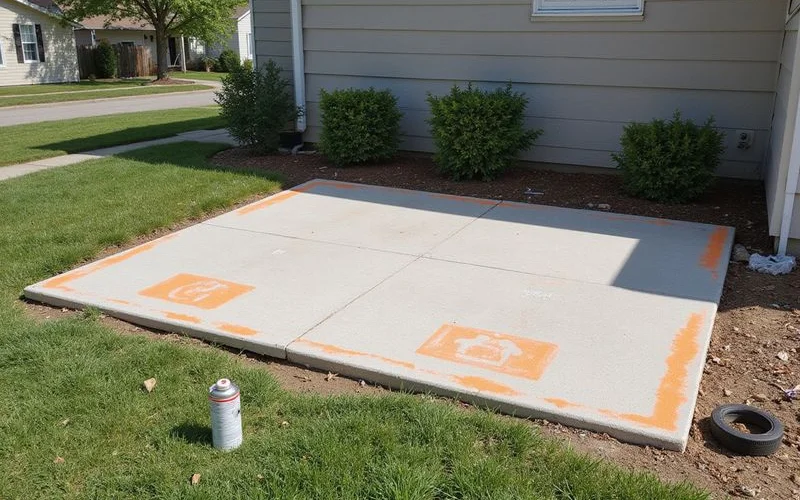
When broader scope becomes warranted
Scope grows for legitimate reasons, and it is worth knowing what they are so you can tell a justified increase from an inflated one.
Extent of movement. Readings showing meaningful deviation across multiple elevations rather than one corner. More area affected means more support locations.
Interior involvement. Where the pattern indicates that support is needed beneath the middle of the house, not just the perimeter. That adds cost and disruption but may be necessary.
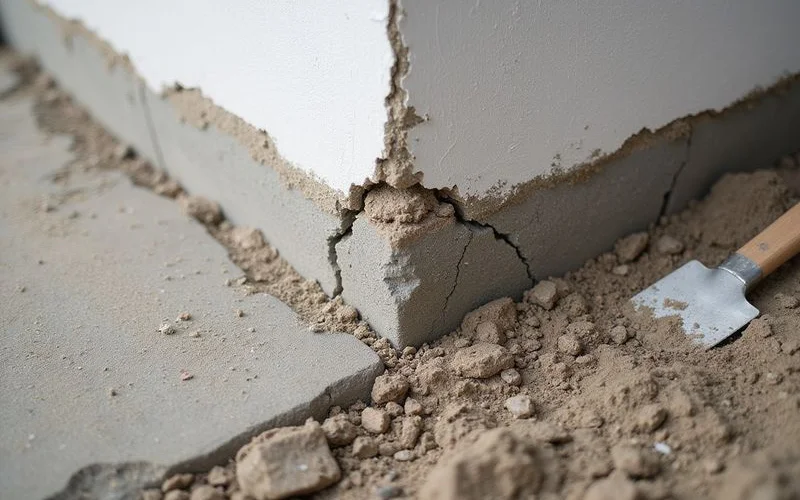
Deterioration of the concrete itself. Not cracking alone, but spalling, exposed and corroded reinforcement, or sections that have lost integrity.
Underlying causes that must be addressed. An active under-slab plumbing leak, or drainage so poor that repair without correction would be undone.
When replacement genuinely enters the conversation
It is a short list.
Where the slab has deteriorated extensively rather than the soil having moved. Where the structure above is being substantially rebuilt or significantly extended anyway, making replacement practical. Where multiple independent professional opinions converge on it. And occasionally where the cumulative cost of very extensive repair approaches the cost of replacement.
Treat a replacement recommendation as a reason to get an independent opinion
Not because it is necessarily wrong, but because it is a large, disruptive and expensive undertaking. An independent licensed engineer has no interest in which answer you get.
The trade-offs, side by side
| Targeted repair | Full replacement | |
|---|---|---|
| Scope | Specific locations | Entire foundation |
| Disruption | Localised, house usually occupiable | Major; occupancy typically not possible |
| Timeline | Days to weeks | Substantially longer |
| Cost | Proportional to locations | Very significantly higher |
| Reversibility of decision | Further work can be added later | None |
| Typical frequency | Common | Rare |
How the decision should be made
By measurement, not by impression. A foundation evaluation produces relative elevation readings showing the pattern and extent of movement, an assessment of the concrete condition where visible, a drainage and grading review, and history.
From those findings, the extent of support needed follows. If that extent is large, the conversation about proportionality is worth having openly, including with an independent engineer.
What should never drive the decision: a single dramatic crack, a company’s preferred scope, or urgency applied at the kitchen table. If a recommendation cannot be traced back to readings, ask to see the readings. Once repair is the direction, what affects the cost and scope of slab repair sets out the variables that move the number.