
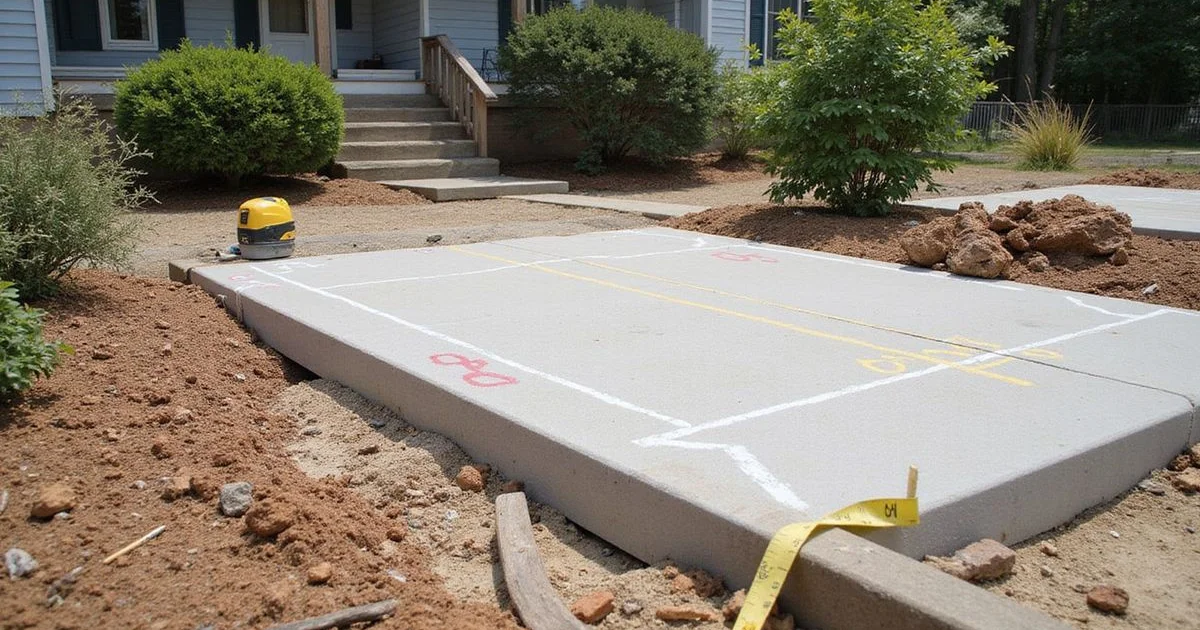
Why the number moves so much
Two proposals for the same house can differ enormously, and the reason is almost never that one company is greedy. It is that slab repair is priced from a set of variables, and each company is making its own assessment of those variables.
Understanding the drivers lets you read a proposal and see where its number came from. This guide is specific to slab work, which is what slab foundation repair covers. For the broader Austin picture across all foundation types, our guide on what foundation repair costs in Austin covers the whole market.
Support count and placement
This is the dominant driver on most slab projects.
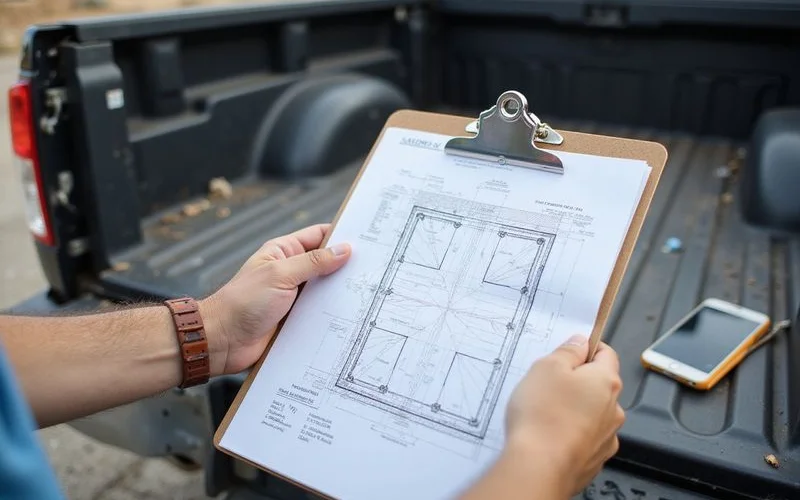
Supports are placed where evaluation findings and structural load paths indicate they will be effective. That is not the same as evenly spacing them around a perimeter, and it is not a function of the length of your walls. A pattern showing movement concentrated at one corner produces a very different plan from one showing deviation across two elevations.
Ask any company what measurements produced their count and where each location sits. A proposal that names locations is one you can evaluate. A proposal that says “18 piers” and nothing else is not.
Access
The second largest driver, and the one homeowners most consistently underestimate.
Exterior access along an open side yard is the simple case: excavate, install, backfill.
Interior access means lifting flooring, cutting through the slab, working inside occupied rooms, and reinstating afterwards. It multiplies labour and adds restoration that exterior work does not need.
Obstructions sit between the two. Narrow side yards that will not take equipment, decks and patios over the work area, mature landscaping, retaining walls, sloped lots and fences that have to come down and go back. Each adds time.
Depth and site conditions
How far a support must go before reaching material that can carry load varies across the Austin region and sometimes across a single lot. Deeper means more material, more time and more cost.
East of the I-35 corridor, deep expansive clay can mean the competent layer is well down. West, in the limestone transition, rock may be shallow, which sounds cheaper but introduces its own complication: premature refusal on rock that is not where you expected it, or on buried debris and old footings.
A proposal should explain how the expected depth was arrived at, and what happens contractually if actual conditions differ.
Ask what happens if refusal comes early or late
Both are real outcomes. How they are priced, and whether a change requires your written approval, should be settled before work starts rather than negotiated in an open pit.
Engineering, permits and plumbing
Engineering is a separate engagement where an engineered plan governs the work. On complex sites it is frequently worth it, and it has the side benefit of making contractor bids genuinely comparable.
Permits apply depending on scope and jurisdiction, and the City of Austin, Travis County, Williamson County and Hays County differ. The proposal should state who applies and who pays.
Associated plumbing covers pre-work and post-work testing where an under-slab leak is suspected or where lifting could stress existing lines, plus any coordinated repair. This is carried out by a licensed plumber and sits alongside the foundation scope.
Restoration
| Item | Question to ask |
|---|---|
| Backfill and compaction | Included, and to what standard? |
| Spoil removal | Included or left on site? |
| Interior slab patching | Included where interior pits are cut? |
| Flooring reinstatement | Included, and can existing material be matched? |
| Landscaping | Replaced, or is the bed left bare? |
| Irrigation | Repaired if lines are cut? |
| Drywall and paint | In scope, or a separate trade? |
Work through that list on every proposal. The gap between two quotes is frequently sitting in this table rather than in the structural work itself, and it is entirely legitimate for a company to exclude restoration as long as it says so clearly. Our guide to access and restoration during slab foundation repair describes what each of those line items actually looks like on site.