
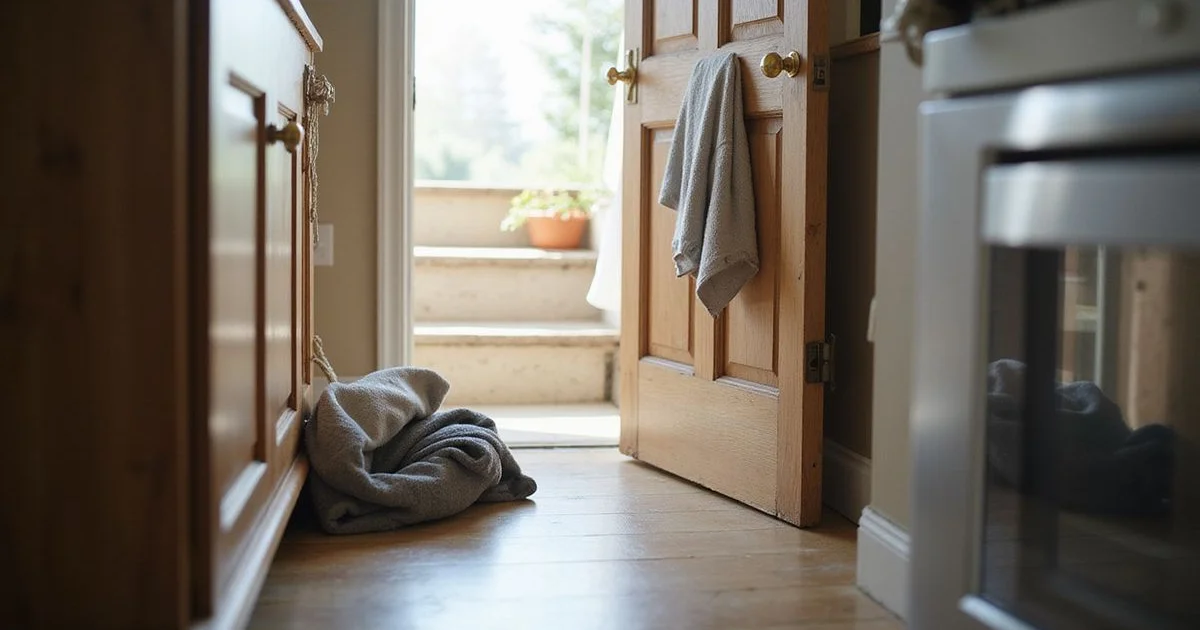
A door is a very sensitive instrument
Doors and windows are among the first things in a house to complain about movement, because they are precisely fitted into openings with only a few millimetres of clearance. Anything that changes the shape of an opening shows up immediately in how they operate.
That sensitivity makes them useful cues. It also makes them noisy, because plenty of ordinary things change how a door fits. This guide separates them. For the wider picture, see foundation warning signs.
The three usual explanations
Seasonal humidity. Wood absorbs moisture and expands. In a humid Central Texas summer, interior timber doors swell and bind, then free up as conditions change. This is the single most common cause, and it reverses.
Hardware. Hinge screws working loose in the frame, a door dropping slightly on its hinges, a strike plate that has shifted, or paint build-up after repainting. Almost always confined to one door.
Opening out of square. Where differential movement has changed the geometry of the opening itself, so the door no longer matches the frame it was fitted to. This is the structural explanation, and it does not reverse on its own.
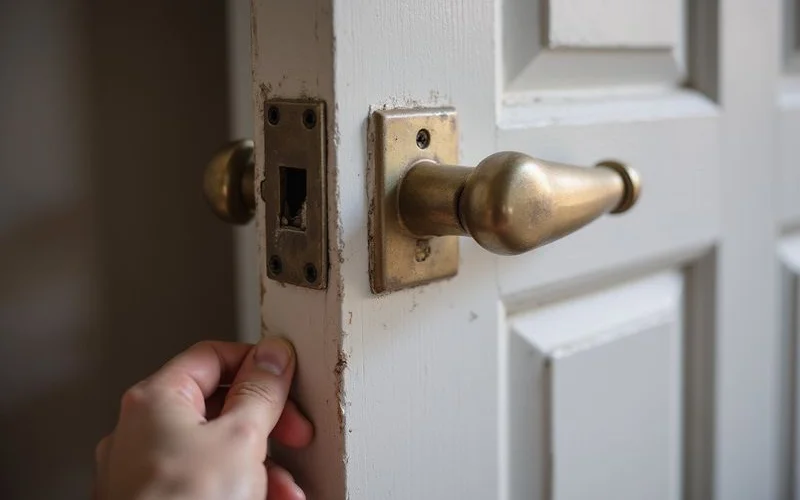
How to tell them apart
Look at the gap around the door when it is closed, or as close to closed as it gets.
Even binding all round, with the door tight everywhere, points toward swelling. Check whether it improves after a dry spell.
A wedge-shaped gap, noticeably wider at one top corner than the other, points toward the opening being out of square. That is the one worth paying attention to.
Rub marks in a specific spot, particularly at a top corner or along one edge, indicate where the door is catching and therefore which way the opening has shifted.
One door affected, hardware or that door specifically. Several doors in different parts of the house changing at once, something systematic.
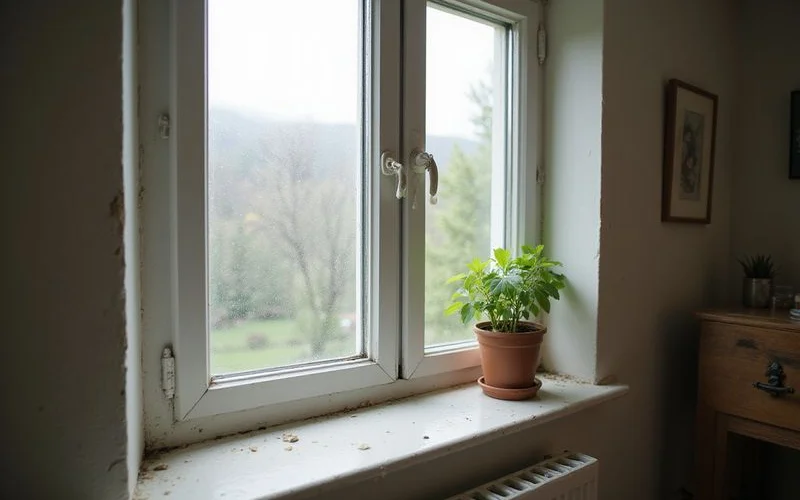
Windows say the same thing differently
A window that will not close squarely, a sash that binds on one side, or a visible gap at one corner of the frame when it is latched. Exterior doors that suddenly need a shove, or a deadbolt that no longer lines up with its strike, are worth noting for the same reason.
Windows tend to be less affected by humidity than interior timber doors, particularly modern ones, so a window going out of square carries slightly more weight.
Timing matters more than the door
Several openings across the house changing within the same few weeks is a pattern. One door that has always been slightly awkward is not.
What to document
| Record | Detail |
|---|---|
| Which doors and windows | Room, and which direction they open |
| What changed | Binding, will not latch, uneven gap, deadbolt misaligned |
| When | Approximate date, and whether it was sudden or gradual |
| Where it catches | Top corner, bottom, latch side, hinge side |
| Whether it reversed | Did it free up after a wet or dry spell |
| What else changed | Cracking elsewhere, floor feel, exterior observations |
Photograph the gap around the closed door, particularly at the corners. That image is surprisingly informative later.
What not to do yet
Do not plane the door. It is tempting, it works immediately, and it destroys the evidence. If the opening later returns toward square, you are left with a door that no longer fits.
Adjusting hinges is more reversible and reasonable to try where you suspect hardware. Just note what you did and when.
When to get measurements
If several doors or windows across different parts of the house changed within a similar period. If the change has persisted through a full wet and dry cycle rather than reversing. If it is accompanied by cracking at opening corners or a floor that feels newly uneven or sloping.
At that point, a foundation evaluation with relative elevation readings will tell you whether the openings going out of square corresponds to measurable movement, and give you a baseline to compare against next year.