
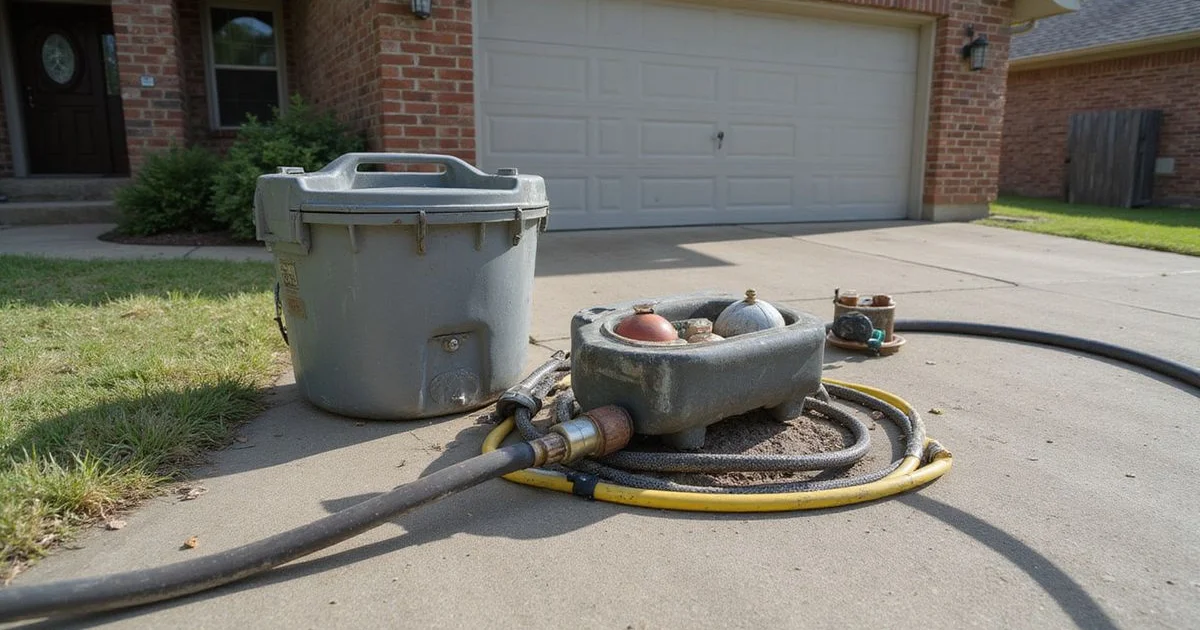
Why plumbing belongs in a foundation conversation
Most homeowners calling about a foundation are not thinking about pipes. But under a slab home, the supply and drain lines run beneath the concrete, and a leak in either puts water into soil that was never meant to receive it.
On the expansive clay found across much of the Austin area, that matters a great deal. Saturated clay swells. Swelling clay can lift a slab. That is the mechanism, and it explains why a thorough foundation evaluation asks plumbing questions rather than treating them as somebody else’s department.
Settlement versus upheaval
The distinction is central here.
Settlement is downward movement, typically where soil has shrunk or consolidated and the structure has followed it down. It is what most people picture when they imagine a foundation problem.
Upheaval, or heave, is upward movement, where soil has swelled and pushed the structure up. A plumbing leak is one of its common causes in Central Texas, along with seasonal swelling of clay and drainage concentrating water in one area.
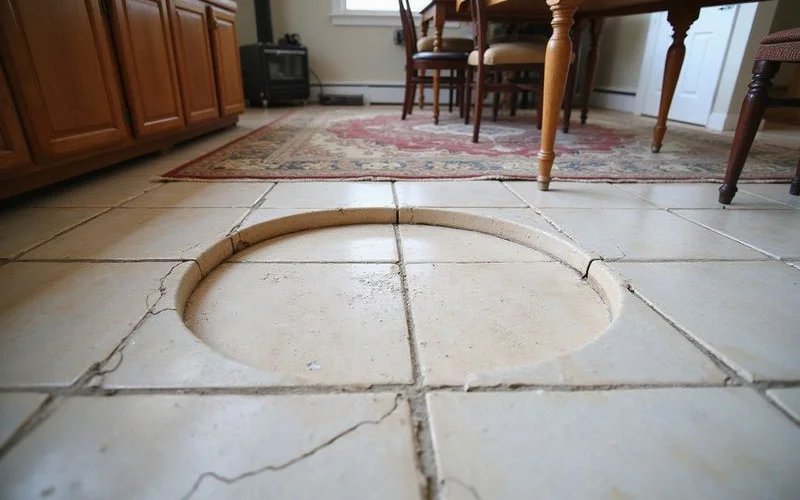
They look different on an elevation map. A slab sitting high near its centre relative to the perimeter is a pattern that raises the plumbing question immediately. Our guide on foundation upheaval versus settlement covers the distinction in more depth.
Treating upheaval as settlement, and installing supports to lift a structure that is already being pushed up, is the kind of mistake that costs a lot and fixes nothing.
Signs that suggest a leak
None of these is conclusive on its own, and all of them are worth noticing.
An unexplained increase in the water bill. The sound of running water when nothing is on. A warm spot on a slab floor, which points toward a hot water line. Persistently damp flooring or a musty smell in one area. An area of yard that stays green or soggy in dry weather. Reduced water pressure. Cracking concentrated around a wet area such as a bathroom or kitchen.
Combine any of those with an elevation pattern showing a raised area, and testing becomes the obvious next step rather than an optional extra.
How testing works
Hydrostatic testing is the standard method for drain lines. A licensed plumber plugs the system, fills it with water to a set level, and watches whether the level drops over a defined period. A drop indicates a leak somewhere in the tested system.
It is a yes-or-no answer about the system, not a location. That is the next step.
Isolation testing narrows it down by testing sections separately, progressively identifying which part of the system is losing water.
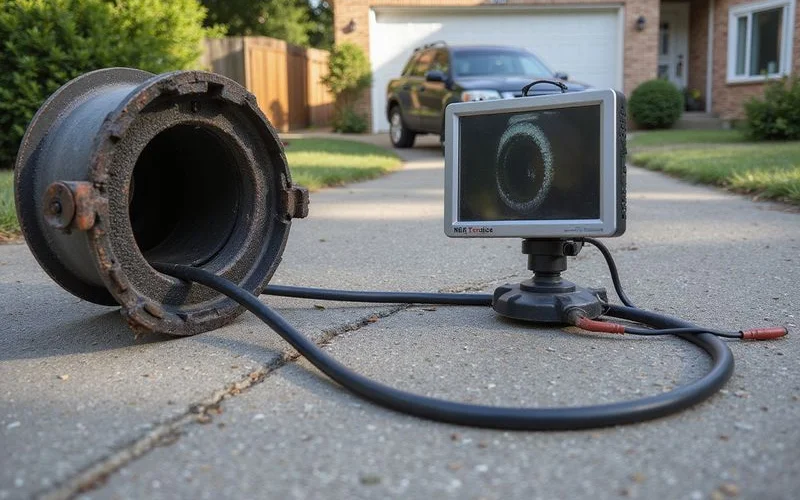
Camera inspection sends a line through the drains to see condition directly, which can reveal breaks, separated joints, root intrusion or bellied sections.
Supply line testing is separate. Pressure lines are tested differently from drain lines, and a supply leak can be located using pressure monitoring and acoustic or thermal methods.
Testing is a licensed plumbing activity
A foundation company should coordinate it and interpret the results alongside the elevation readings. It should not be performing it.
Sequence matters
| Stage | Why it comes here |
|---|---|
| Elevation readings | Establishes the pattern, including whether heave is indicated |
| Plumbing testing | Determines whether a leak is contributing |
| Plumbing repair | Removes the water source |
| Soil response period | Saturated clay needs time to release moisture |
| Re-measure | Establishes where the structure sits once the cause is gone |
| Foundation work, if still warranted | Now addressing a stable situation |
Skipping straight to foundation support over an active leak leaves the cause running underneath the repair.
After foundation work
Testing afterwards matters too, particularly on slab projects involving elevation recovery. Lifting a structure changes its position relative to fixed plumbing connections, and those connections can be stressed by the movement.
A proposal that includes pre-work and post-work testing is being thorough. One that mentions plumbing nowhere at all, on a slab home, is leaving a significant variable unexamined. The cues that prompt testing in the first place usually surface during what a foundation evaluation examines.