

Why preparation changes the outcome
An evaluator arriving at your house can measure what is happening today. What they cannot see is what happened over the last three years, and that is frequently the most informative thing about your situation.
You are the only person who can supply it. Half an hour of preparation genuinely improves the quality of a foundation evaluation, and it costs nothing.
Photograph the observations
Every crack, gap, sticking door and uneven area. Include something in frame for scale, a coin or a tape measure. Note which room or which exterior elevation each one is on, because photographs get confusing fast once there are more than a few.
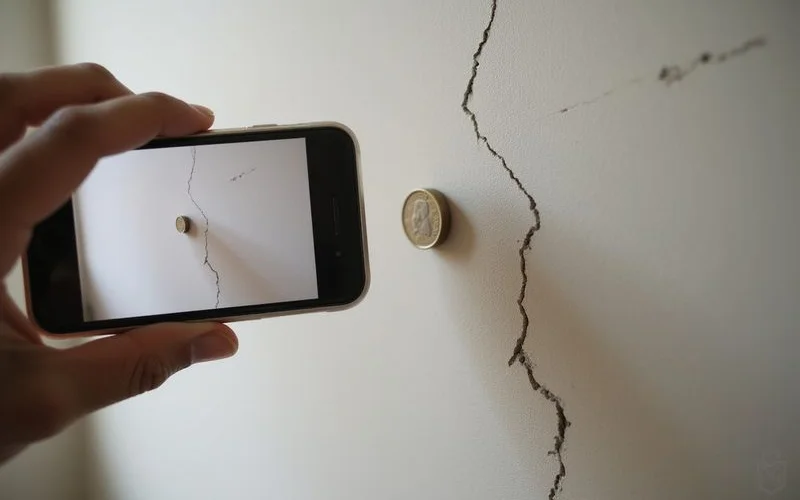
Photograph the outside too: the perimeter, where downspouts discharge, any soil pulled away from the slab edge, cracking in brick veneer, porch or patio separation, and the garage door frame.
If you have older photographs that happen to show a wall or an exterior elevation from before the change, those are gold. Family photographs taken in a room often capture a doorway or a wall line incidentally.
Build a timeline
For each observation, write down roughly when you first noticed it and whether it has changed since. Approximate is fine; “last summer” is far more useful than nothing.
Then note what else happened around those times:
- Extended drought or unusually heavy rain
- A tree removed, planted or that died
- New patio, driveway, path or deck
- Re-grading, new beds, changed landscaping
- Irrigation installed or altered
- Plumbing work, or any suspected leak
- An addition or a remodel
- A neighbouring property doing construction or excavation
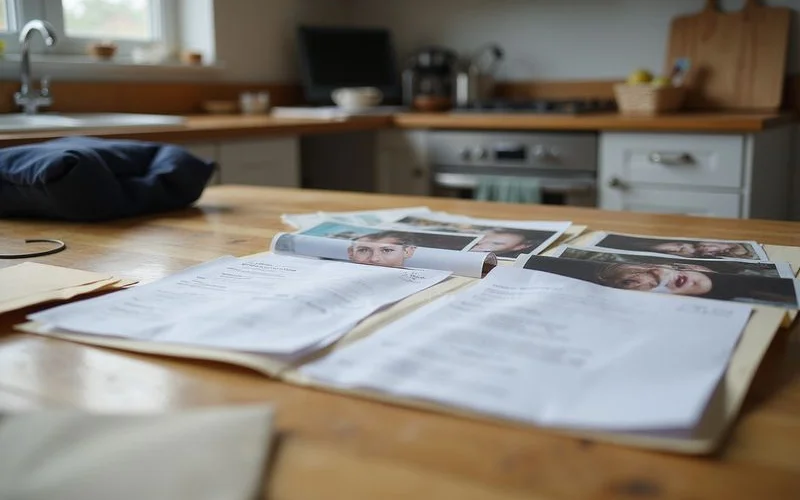
Gather the paperwork
| Document | Why it matters |
|---|---|
| Prior foundation repair scope and invoices | Tells us what was addressed and where |
| Any engineering report | Independent professional record of an earlier condition |
| Warranty documents | Coverage may still apply, and transfer terms matter |
| Permits and inspection records | Regulatory history of past work |
| Plumbing service records | Leaks, repairs, camera inspections |
| Previous elevation readings | The single most useful comparison available |
| Seller disclosure, if you bought recently | What was declared at purchase |
If you are buying rather than already owning, our guide on buying a home with foundation repairs covers what to request from a seller.
Check a few things yourself
Walk the perimeter after rain and note where water pools and which way the ground falls. Look at whether downspouts discharge at the wall or away from it. Check whether soil or mulch sits above the slab edge anywhere.
If you have a crawlspace, open the hatch and shine a torch in. Note whether the soil looks damp, whether there is standing water, and whether you can see a vapour retarder. Do not crawl in if access is tight or uncertain; a look from the opening is enough to be useful.
Clear access before the appointment
Interior access to the main living areas and a clear path around the perimeter. If you have a crawlspace hatch, make sure it can actually be opened. Appointments get shortened by blocked access more often than by anything else.
What to tell us at the start of the visit
The one observation that worries you most, and why. Whether anything has changed recently or suddenly. Whether you are planning to sell, buy, refinance or remodel, because that affects whether an independent engineering opinion is worth considering.
And whether you have already had quotes. Knowing what has been proposed elsewhere lets us address the differences directly rather than talking past them.
To see how that preparation is used on the day, read what a foundation evaluation examines.