
Moisture is a structural issue here
On a slab home, water under the foundation is a soil problem. On a pier-and-beam home, water in the crawlspace is a wood problem, and wood problems become structural problems.
That distinction is the single most useful thing to understand about pier-and-beam repair. The sagging floor you can feel upstairs is very often the last stage of a process that started years earlier with a downspout discharging in the wrong place.
Where crawlspace moisture comes from
Soil vapour. Bare earth in an enclosed space releases moisture continuously. In a crawlspace with limited ventilation, that alone raises humidity significantly.
Surface water entering from outside. This is usually the bigger contributor. Grade falling toward the house, downspouts discharging at the stem wall, a blocked drainage swale, irrigation spraying the perimeter, or a patio that channels runoff toward the foundation.
Plumbing. A slow supply leak or a failing drain line in the crawlspace adds water directly and continuously.
Poor ventilation. Blocked or painted-over vents, or insufficient cross-flow, means humid air stays put instead of exchanging with outside air.
What moisture does to framing
Wood tolerates being wet occasionally. It does not tolerate staying damp.
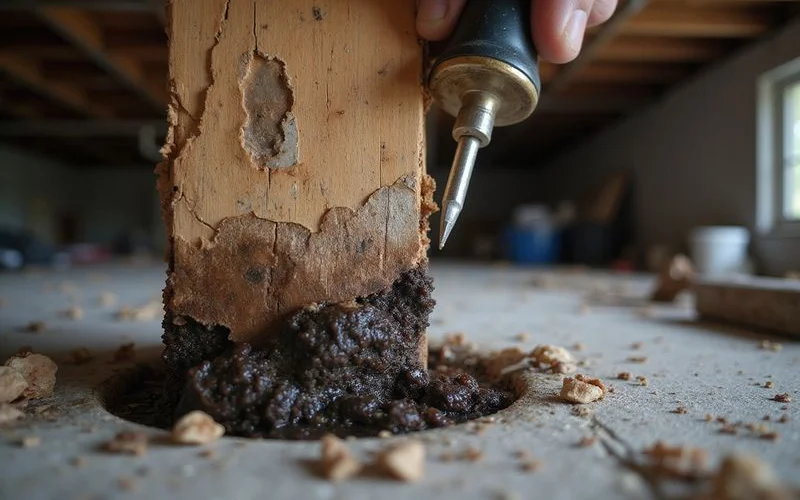
Fungal decay, often called dry rot despite requiring moisture, breaks down the wood fibre itself. Affected timber loses strength progressively, and by the time it looks obviously damaged it has usually lost substantial capacity. It appears as darkening, a soft or fibrous surface, cubical cracking, or wood that gives under a probe.
Termites are a second consequence. Central Texas has plenty of them, and damp wood in a dark enclosed space is exactly what they look for. Termite damage and decay frequently appear together.
Deflection follows. A joist that has lost capacity sags under the same load it used to carry comfortably. Several sagging joists produce the softness you feel walking across a room.
The order of repair matters
Fix the water, then the wood, then the level. Doing them in any other order means redoing the work.
Moisture control measures
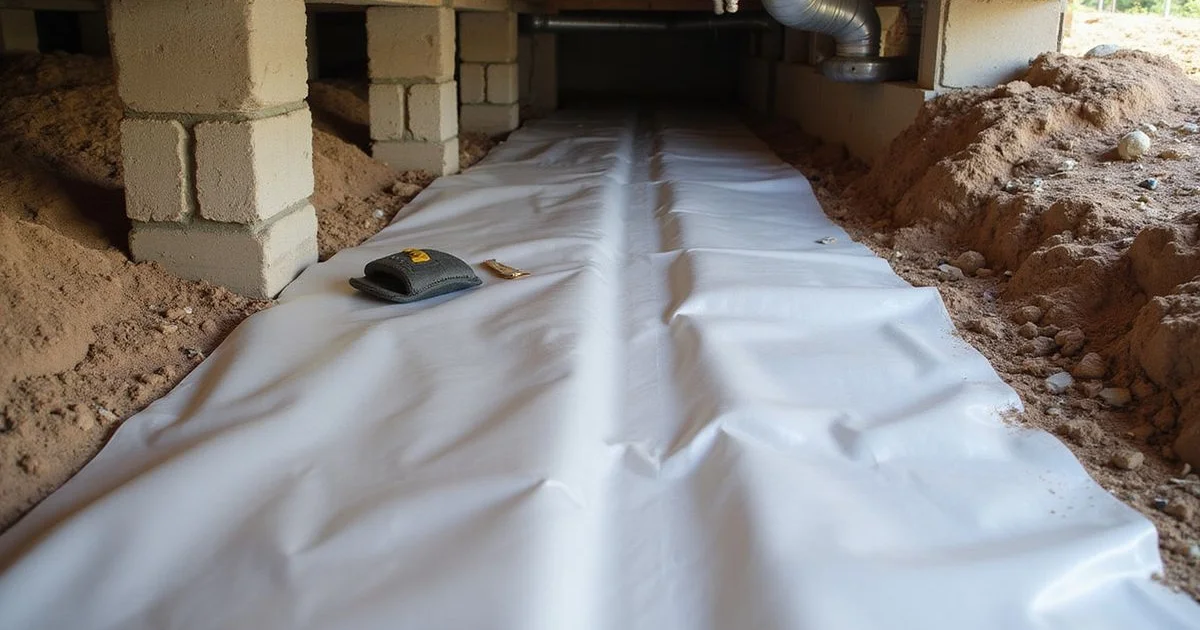
Vapour retarders. A sheet material laid over crawlspace soil, with seams overlapped, slows moisture rising from the ground. It is a common measure and often effective, but it addresses ground vapour, not water entering from outside.
Drainage and grading correction. Usually the highest-value change. Extending downspouts, restoring fall away from the house, clearing swales, and moving irrigation away from the perimeter. Our guide on foundation drainage and grading covers what an assessment considers.
Ventilation. Clearing blocked vents and ensuring cross-flow. Approaches to crawlspace ventilation vary, and the right one depends on the specific space rather than on a general rule.
Clearance. Removing stored material and debris so air can move and so the space can actually be inspected.
Structural repair options
| Condition | Typical response |
|---|---|
| Joist with limited decay or deflection | Sister a sound member alongside it |
| Joist substantially failed | Replace the member |
| Girder with a localised decayed section | Replace that section with temporary support in place |
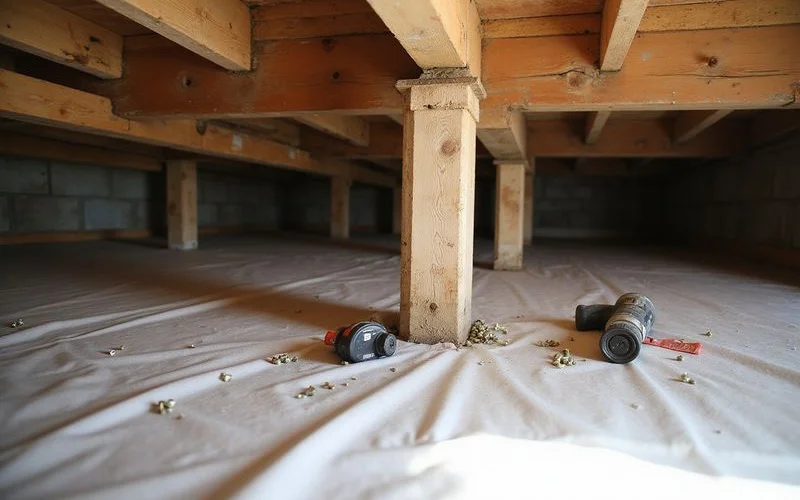
| Post rotted at the base | Replace with a proper footing and adjustable support |
| Sill plate deterioration | Replace affected sections, address the water source |
| Excessive span between supports | Add intermediate support |
What an assessment looks at
A proper crawlspace assessment covers moisture conditions in the soil and on the framing, the presence and condition of any vapour retarder, ventilation, clearance, girder and joist condition including probing where decay is suspected, support and pier condition, and evidence of termite activity.
It also looks outside, because that is where most crawlspace water begins. Grading, downspouts, irrigation and any recent site changes all get walked.
If you have noticed a musty smell, soft floors, or any of the other signs a pier-and-beam foundation needs work, or you simply have not been under the house in a decade, that assessment is worth doing before anything visible appears upstairs. Moisture damage is gradual, and the earlier it is caught the smaller the structural repair tends to be.